
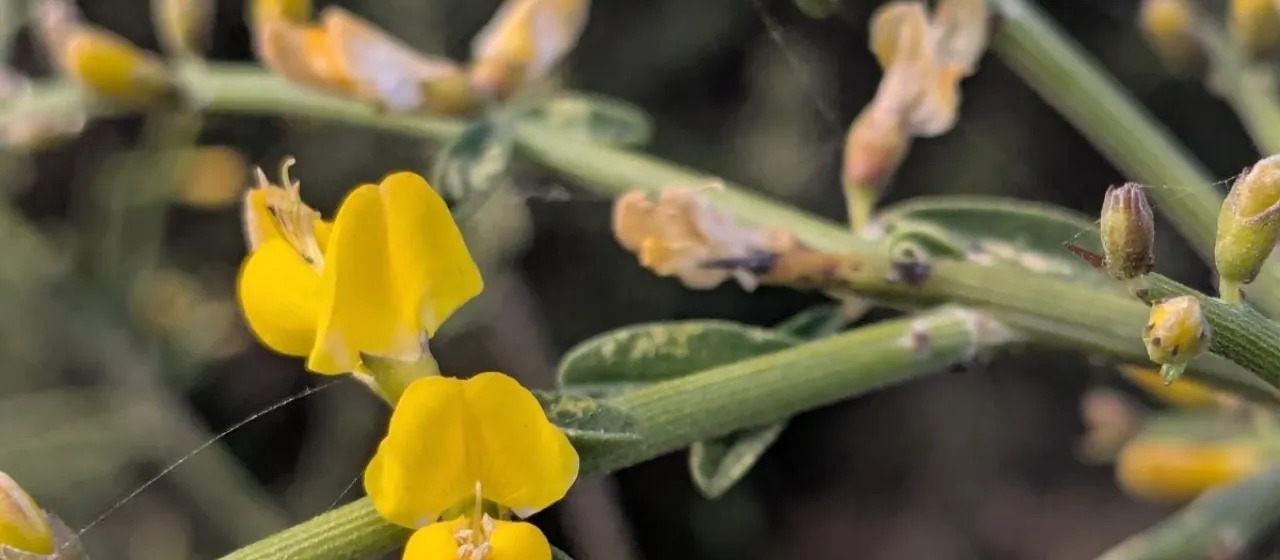
Description
Genista fasselata is a perennial woody shrub belonging to the Fabaceae family. Known for its resilience, it is a characteristic plant of the Eastern Mediterranean flora. It typically grows as a dense, spreading shrub that can withstand harsh environmental conditions, including intense solar radiation and periodic water scarcity.
The origin of this species is linked to the dry, rocky, and calcareous terrains of the Mediterranean basin. It has evolved to thrive in nutrient-poor soils where moisture availability is limited. Its natural distribution plays a key role in preventing soil erosion in steep, mountainous areas and contributes to the local ecological balance.
Botanically, Genista fasselata is distinguished by its stiff, often spiny branches that protect it from excessive herbivory. Its small leaves are adapted to reduce transpiration. During the spring season, the plant produces an abundance of bright yellow, pea-like flowers, which create a significant visual impact and serve as a vital source of nectar for local pollinators.
Agricultural and gardening requirements focus on the necessity of excellent soil drainage. It is a quintessential xeriscaping plant, demanding full sun exposure to flourish. Over-watering is the primary risk factor for this crop, as it quickly leads to root pathogens. Fertilizer application should be avoided, as the plant is adapted to survive in low-fertility soils.
Regarding its utility, Genista fasselata is primarily utilized in sustainable landscaping for dry gardens and slopes stabilization. It is highly valued for its low-maintenance profile and its ability to provide structural interest throughout the year. Beyond its aesthetic function, it contributes to ecosystem health by supporting pollinators and acting as a hardy component of Mediterranean plant communities.