
Description
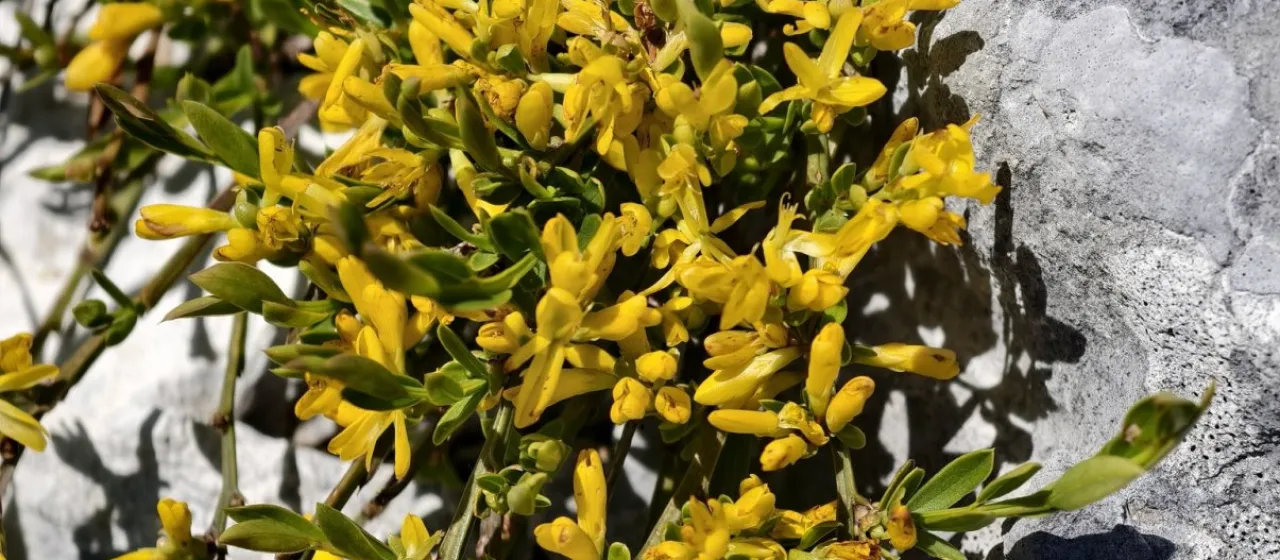
Genoa broom (Genista januensis) is a prostrate, low-growing shrub belonging to the Fabaceae family. It is a highly valued ornamental plant known for its vibrant yellow blossoms that create a striking visual impact when planted in mass or on slopes.
The species originates from Southern and Central Europe. It is naturally adapted to rugged environments, frequently colonizing limestone cliffs, rocky slopes, and dry, open woodlands. This evolutionary history provides it with exceptional drought tolerance and resilience in harsh, low-nutrient soils.
Botanically, Genista januensis is recognized by its distinct triangular stems and small, lanceolate leaves. It typically maintains a low profile, reaching a height of only 20 to 30 centimeters, while spreading laterally to cover significant ground. The flowering period occurs in late spring and early summer, producing terminal racemes of bright yellow flowers.
In terms of cultivation, this plant requires full sun exposure and excellent drainage. It thrives in gravelly, sandy, or alkaline soils. Gardeners should avoid planting it in areas with high water retention, as root rot is the most common cause of failure. Minimal fertilization is required, as the plant is adapted to nutrient-poor substrates.
The primary use of Genoa broom is in xeriscaping and rock gardens, where its trailing habit can be fully appreciated. It is also an effective choice for bank stabilization and erosion control. While generally hardy, the plant may occasionally be affected by aphids or powdery mildew in poorly ventilated or excessively humid microclimates, requiring standard horticultural interventions.