
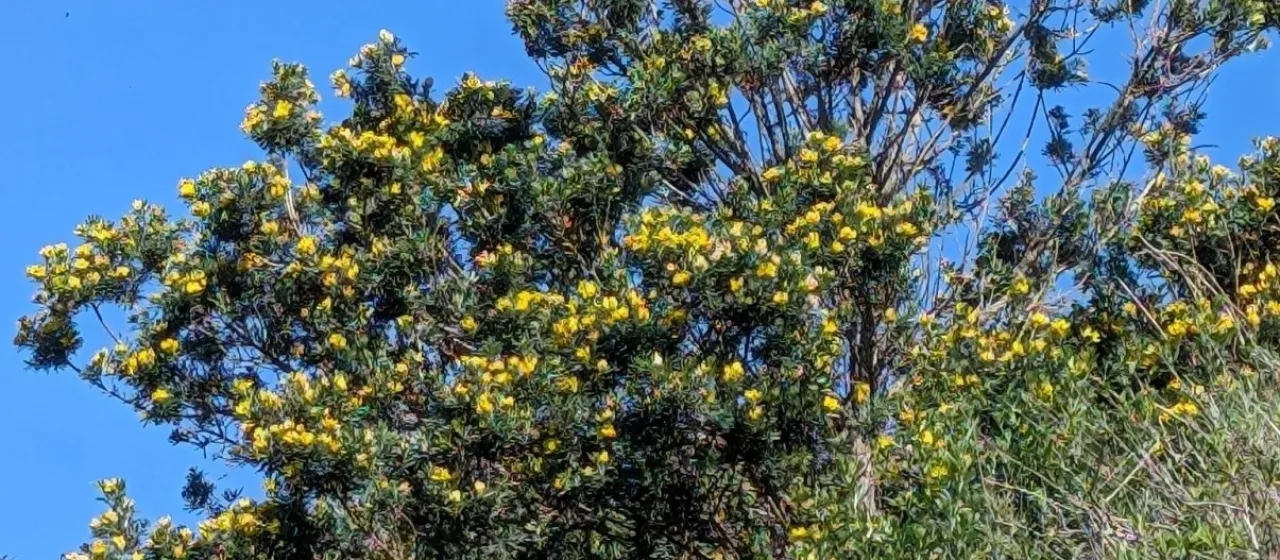
Description
Flax-leaved broom (Genista linifolia) is a perennial shrub belonging to the Fabaceae (legume) family. This species is widely recognized for its robust nature and its valuable role in sustainable agriculture due to its symbiotic relationship with nitrogen-fixing bacteria.
Originating from the Mediterranean region and parts of North Africa, this plant has adapted to rocky and arid habitats. Its historical range focuses on coastal areas and mountainous slopes where it functions as a pioneer species, helping to stabilize ecosystems and improve poor soils for future planting.
The plant is characterized by its slender, flax-like leaves and vibrant, dense terminal clusters of yellow flowers. As a woody legume, it develops a deep root system that serves to break up compacted soil layers, while its canopy provides shade and protection for smaller understory plants.
Agricultural success with this crop depends on full sun exposure and excellent soil drainage. It is highly drought-tolerant once established and does not require significant fertilization, as it fixes its own nitrogen. However, producers must avoid waterlogged sites, as root rot is a major risk factor for this species.
- Nitrogen fixation to enhance soil fertility naturally.
- Erosion control on sloped or sandy agricultural lands.
- Provision of high-quality nectar for commercial and hobbyist apiaries.
- Low-input maintenance for landscaping and field margins.
Management of pests and diseases requires monitoring for scale insects and fungal pathogens such as rust or mildew. Regular pruning after the blooming period is recommended to maintain the plant's health and density. Proper spacing between individual plants is also crucial to ensure adequate air circulation and reduce the incidence of foliar diseases.