
Description
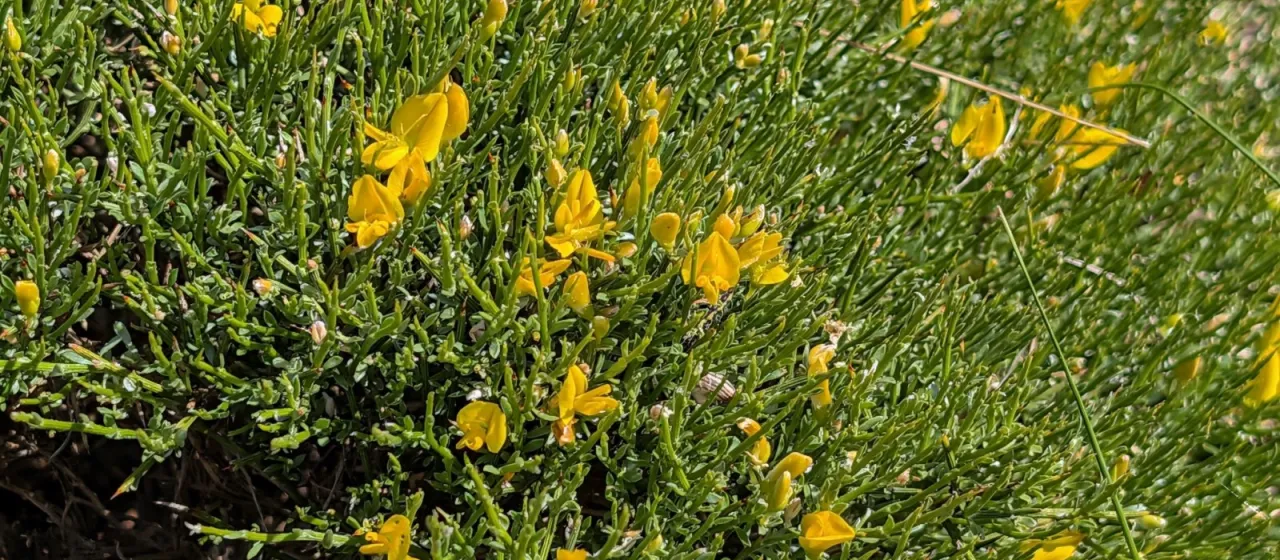
Lobel's broom (lat. Genista lobelii) is a perennial low-growing shrub belonging to the Fabaceae family. In horticulture and landscape design, it is valued as a groundcover or alpine plant capable of forming dense, decorative cushions of stems. This hardy species is well-adapted to harsh high-altitude conditions and stony soils.
The natural range of this plant covers mainly the mountainous regions of Southern Europe and the Mediterranean. In the wild, Lobel's broom grows on open, sunny slopes and limestone crevices, which defines its high tolerance for drought and nutrient-poor substrates.
Botanically, the plant is a branched shrub, usually reaching no more than 20–30 cm in height. Its stems are stiff and often spiny, covered with small linear leaves. The flowering period occurs in spring and early summer, when the shrub is covered in bright yellow papilionaceous flowers, creating a stunning golden carpet effect.
For successful cultivation of Lobel's broom, it is necessary to select sites with maximum sunlight. The plant is extremely demanding regarding drainage: stagnant water in the root zone is detrimental, so light, sandy or loamy soils with a neutral or slightly alkaline pH are highly preferred.
The economic use of the species is focused on ornamental gardening. It is ideal for rockeries, stony gardens, and stabilizing dry slopes. It is important to remember that the plant requires almost no watering after establishment, and maintenance is limited to occasional light pruning to maintain a compact habit.
- Excellent resistance to drought and strong winds.
- Needs protection against damp winter conditions.
- Minimal requirement for organic fertilizers.
- Ease of propagation through seeds or cuttings.