
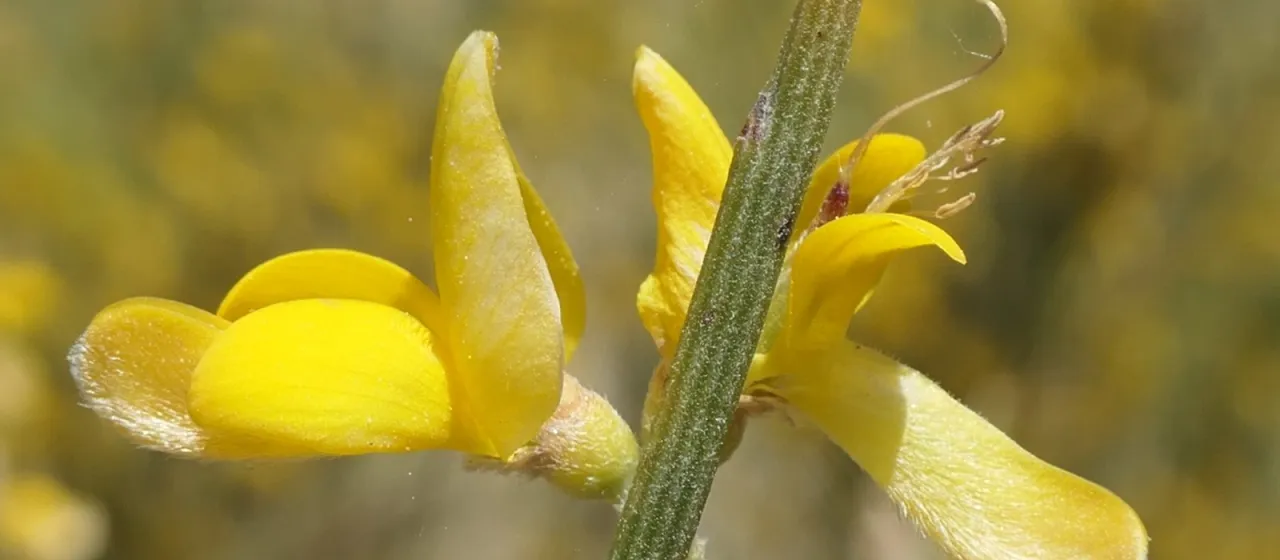
Description
Genista spartioides is a perennial subshrub belonging to the Fabaceae (legume) family. This species is highly adapted to arid environments, characterized by its distinctive rush-like, green, photosynthetic stems and small, sparse leaves, which allow the plant to minimize water loss through transpiration.
The plant originates from the Mediterranean region, typically inhabiting dry, rocky slopes and scrublands. Its geographic distribution is linked to areas with mild winters and hot, dry summers, where it has evolved to thrive in soils that are often nutrient-poor and rocky, showcasing exceptional tolerance to environmental stressors.
Botanically, Genista spartioides is notable for its vigorous growth and vibrant yellow, pea-like flowers that appear in late spring and early summer. These flowers form dense racemes along the tips of the branches, providing a significant nectar source for local pollinator populations while adding high aesthetic value to the landscape.
Cultivation of this species requires full sun exposure and excellent soil drainage. It is not suitable for damp, heavy clay soils as they often lead to root rot. As a leguminous plant, it has the biological capability to fix nitrogen through a symbiotic relationship with soil bacteria, making it self-sufficient in nitrogen-poor substrates and reducing the need for chemical fertilizers.
In practice, Genista spartioides is used for xeriscaping, erosion control on slopes, and as a structural element in Mediterranean-style gardens. It is relatively resistant to common pests, though aphids or fungal root issues may occasionally occur if the soil remains waterlogged. Maintenance is minimal, requiring only light pruning after flowering to maintain a compact, healthy shape.
- Excellent drought tolerance.
- Nitrogen-fixing capabilities.
- Suitable for rocky and poor soils.
- High value for pollinator biodiversity.