
Description
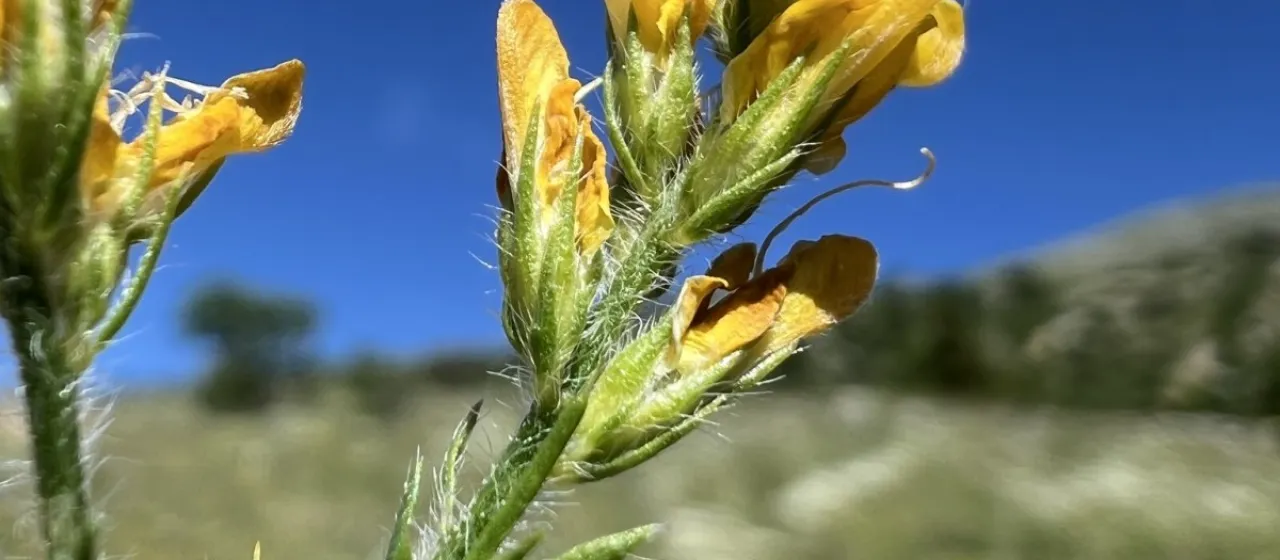
Genista sylvestris is a perennial subshrub species belonging to the legume family (Fabaceae). Characterized by its relatively low growth habit, typically ranging from 20 to 50 centimeters in height, this plant exhibits typical adaptations to harsh, dry environments. Its stems are often pubescent, which serves as a protective layer against excessive transpiration.
The native range of Genista sylvestris is primarily centered in Central and Southern Europe. It thrives in open, rocky habitats, limestone slopes, and well-drained meadows. Throughout its evolution, the species has adapted to nutrient-poor soils, making it an excellent candidate for ecological restoration projects and dry landscape management where other plants struggle to establish.
Botanically, the plant produces vibrant yellow, pea-like flowers arranged in terminal racemes, which are highly attractive to pollinators. The leaves are generally small and lanceolate, allowing the plant to conserve moisture effectively. Following the flowering period, small pods containing several seeds develop, which facilitate the species' natural propagation in the wild.
In terms of cultivation, Genista sylvestris requires full sun exposure and well-draining soil, preferably with a slightly alkaline pH. It is highly intolerant of waterlogged conditions and heavy, compacted clay soils, which can lead to root rot. Once established, the shrub is exceptionally drought-tolerant and requires virtually no fertilization, as it is adapted to low-fertility substrates.
From an agricultural and landscape perspective, this species is highly valued for erosion control and slope stabilization due to its deep taproot system. It is also a significant nectar plant that supports local bee populations. While not a primary food crop, its utility in creating sustainable, low-maintenance landscapes and maintaining soil structure makes it an important plant in environmental horticulture.
- Highly drought-resistant properties.
- Excellent for preventing soil erosion.
- Low-maintenance plant for rocky gardens.
- Valuable nectar source for beneficial insects.