
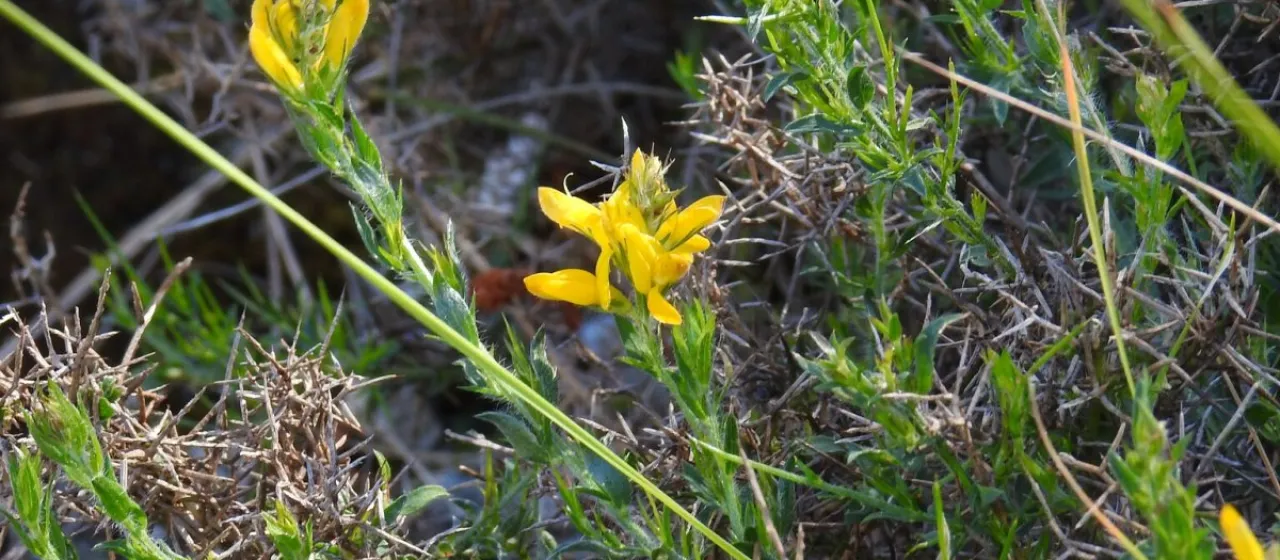
Description
Genista tournefortii is a perennial subshrub belonging to the Fabaceae (legume) family. Renowned for its resilience, this species is a key plant in Mediterranean-type ecosystems, characterized by its ability to thrive in poor, rocky, and nitrogen-deficient soils while maintaining a compact and stable growth habit.
The plant originates from the Mediterranean region, specifically flourishing in the Iberian Peninsula. Its natural habitat includes scrublands, rocky hillsides, and coastal dunes. Due to its evolutionary adaptation to semi-arid climates, it has become a popular subject for xeriscaping and environmental restoration projects where water resources are strictly limited.
Botanically, Genista tournefortii is defined by its tough, stiff stems and narrow, deciduous or semi-evergreen leaves. The bright yellow flowers are typical of the genus, appearing in terminal racemes. Its root system forms symbiotic relationships with nitrogen-fixing bacteria, allowing the plant to naturally improve the fertility of the soil in which it grows.
In terms of cultivation, it requires full sun exposure and extremely well-draining soil. It is highly intolerant of heavy, waterlogged conditions, which can quickly lead to root rot. For agricultural or landscaping purposes, pruning should be conducted immediately after flowering to encourage dense foliage growth and prevent the plant from becoming overly woody or leggy over time.
- Excellent drought resistance
- Effective for erosion control on steep slopes
- Low maintenance requirements once established
- Valuable for supporting pollinator biodiversity
The primary health issues for this shrub are related to fungal pathogens, particularly when planted in areas with poor airflow or high humidity. Pests such as spider mites may occur during prolonged dry heat, but they rarely cause terminal damage. Maintaining a proper plant spacing is the most effective cultural practice for preventing both pest outbreaks and disease development.