
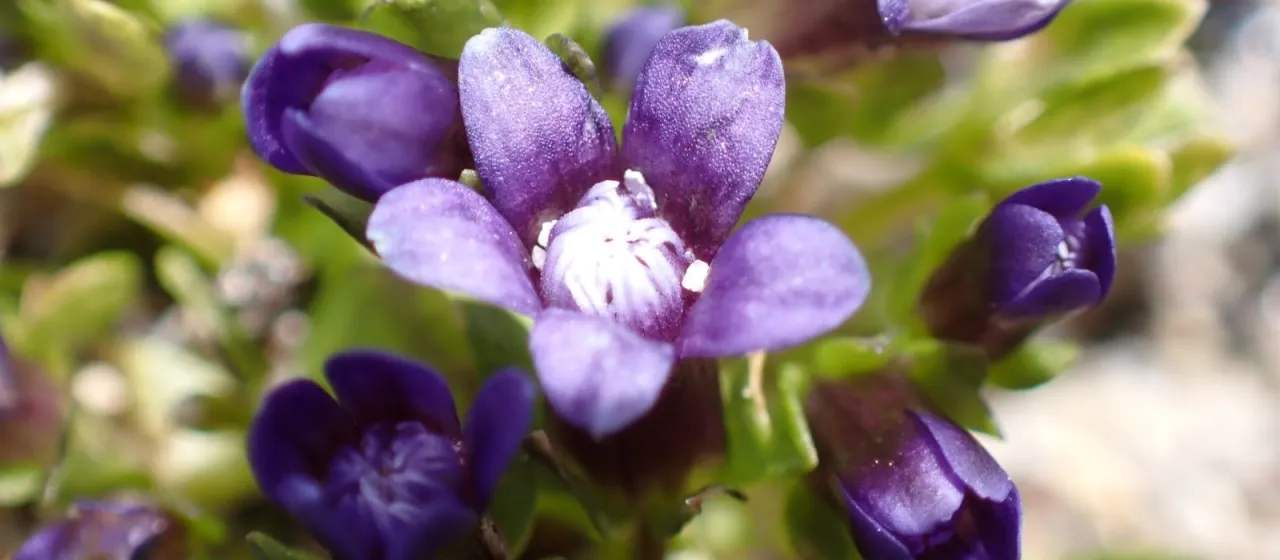
Description
Dwarf gentian (Gentiana nana) is a perennial plant belonging to the Gentianaceae family. Known for its compact stature and resilience, this species has evolved to thrive in high-altitude environments where environmental stressors, such as thin air and nutrient-poor soils, limit the growth of most other vegetation.
The species originates from the mountainous regions of Central and Southern Asia. Its natural habitat includes alpine meadows and scree slopes, characterized by intense ultraviolet exposure and rapid drainage, which have shaped the physiological adaptations of the plant throughout its evolutionary history.
Botanically, Gentiana nana is characterized by a basal rosette of leaves and striking, funnel-shaped flowers that appear during the short growing season. The root system is deep and fibrous, allowing the plant to anchor itself firmly into rocky substrates and access moisture trapped in sub-surface rock fissures.
Cultivation requirements for the dwarf gentian focus on mimicking its native environment. Success in an agricultural or garden setting depends on providing well-draining, slightly acidic soil and avoiding heavy organic mulches that can promote crown rot. Sunlight exposure should be ample, though protection from scorching mid-day heat is beneficial in lower altitudes.
Regarding хозяйственное use, the plant is primarily cultivated as a high-value ornamental for rock gardens and specialty alpine collections. While not a commercial field crop, its botanical significance and chemical composition make it a subject of interest for phytochemical research. Typical pests include aphids and slugs, which must be managed through integrated pest control to ensure the longevity of the plantings.