
Description
Geoffroea decorticans, commonly referred to as Chañar, is a deciduous tree belonging to the Fabaceae family. It is a vital botanical species native to the arid and semi-arid regions of South America, known for its extreme resilience and ability to provide resources in harsh desert-like environments.
The plant originates from the extensive regions of Argentina, Chile, Paraguay, and Bolivia. It is typically found in dry forests and shrublands, where it acts as a stabilizing force for the soil. Its ability to tolerate low-moisture environments makes it a significant subject for research into sustainable agriculture in changing climates.
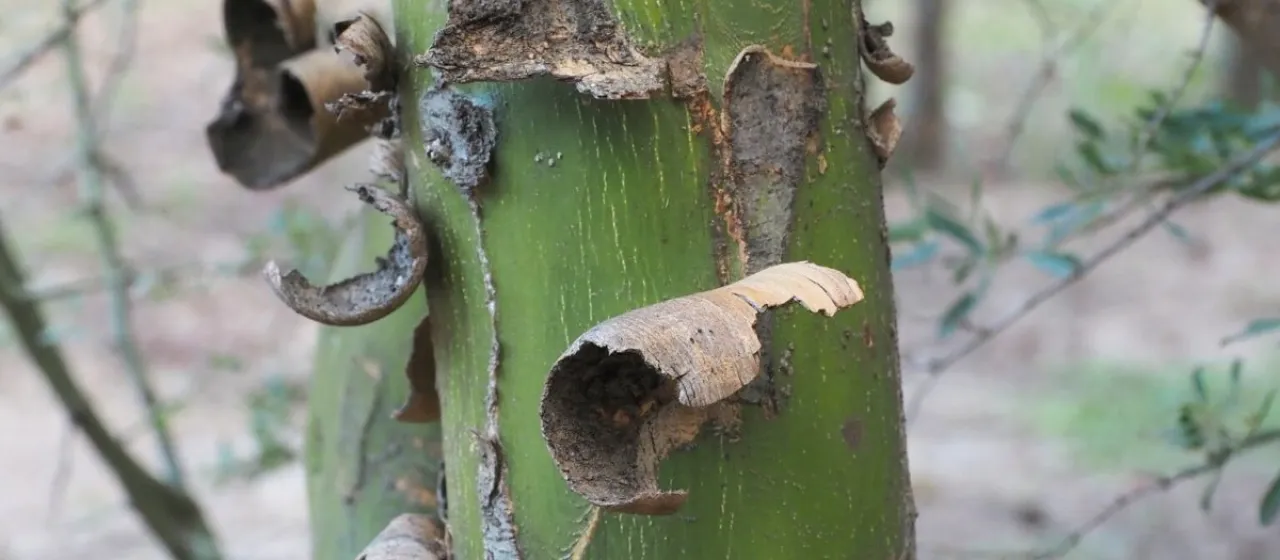
Botanically, this species is noted for its smooth, exfoliating bark and complex leaves. Its bright yellow flowers bloom in late spring, leading to the development of small, sweet, drupe-like fruits. These fruits are high in sugar content and have been a traditional food source for indigenous populations for centuries, often processed into syrups and flour.
Cultivation requirements are relatively straightforward: the plant thrives in full sun and requires well-drained soils. While it can tolerate saline and rocky environments, it is highly susceptible to root damage in waterlogged areas. Agrotechnical management should focus on initial drought-proofing during the seedling stage, after which the tree becomes largely self-sufficient.
Main хозяйственное usage applications include:
- Human nutrition: production of jams, syrups, and the traditional "patay" flour.
- Livestock management: fruits and leaves serve as high-energy fodder for livestock.
- Construction and crafts: dense, durable wood used for timber, furniture, and handicrafts.
- Land reclamation: protecting soil integrity in arid lands through reforestation programs.
Disease management for Geoffroea decorticans is rarely intensive due to its natural hardiness. Potential issues include root rot caused by irrigation mismanagement and minor attacks from defoliating insects. By minimizing human intervention and respecting its native habitat, this culture remains a highly sustainable and productive resource for dryland agriculture.