
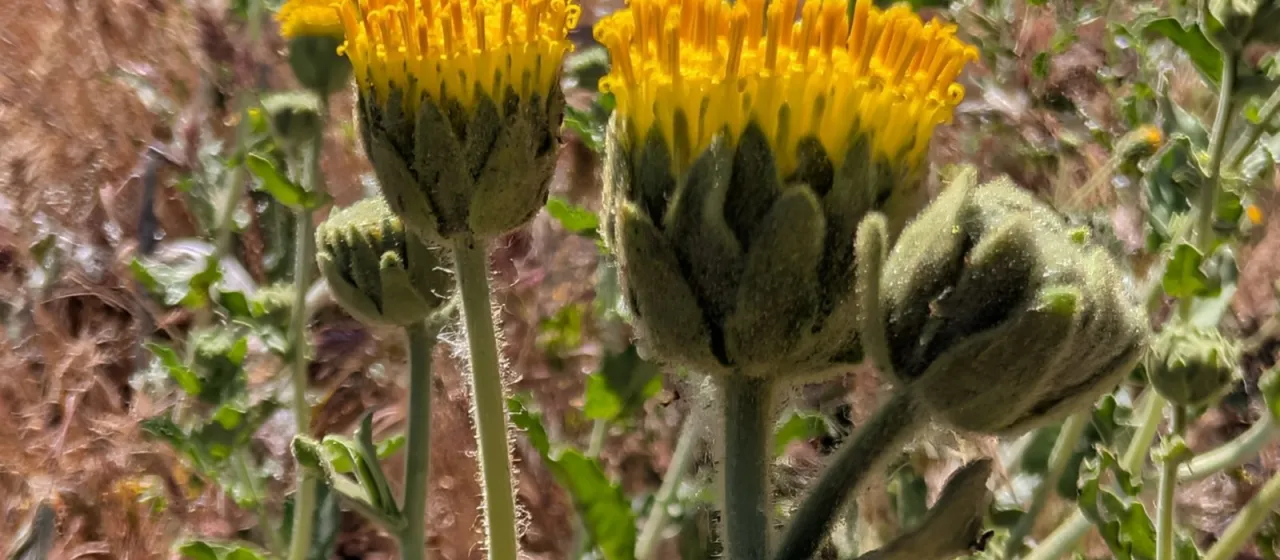
Description
Sticky desert sunflower (Geraea viscida) is a distinctive annual herb belonging to the Asteraceae family. While not a conventional staple crop, it serves as an important botanical subject for understanding plant adaptation strategies in high-stress, arid environments and is gaining niche popularity in xeriscaping.
The plant originates from the southwestern United States, primarily localized in the arid desert regions of Southern California. Its native habitat consists of open, gravelly, and sandy slopes where it thrives under high temperatures and intense direct sunlight, surviving cycles of prolonged drought that would be fatal to most common agricultural cultivars.
Botanically, Geraea viscida is characterized by its glandular, pubescent stems and foliage, which excrete a sticky substance — the source of its common and scientific names. The leaves are typically lanceolate, and the plant produces bright yellow flower heads that attract local pollinators, contributing to the biodiversity of the desert ecosystem during its active growing season.
Cultivation requirements are strict and strictly mimic its natural environmental niche. To successfully propagate this species, one must provide excellent soil drainage, as the roots are highly susceptible to rot if held in saturated conditions. Furthermore, the plant requires full sun exposure and generally performs poorly if exposed to artificial fertilizers or excessive soil nitrogen, which can lead to leggy, weak growth.
In terms of хозяйственное usage, the sticky desert sunflower is utilized in ecological restoration projects to stabilize sandy desert soils and in decorative xeriscaping as a low-maintenance native plant. Major pests include aphids and spider mites, which can be managed through natural predators, while fungal pathogens are prevented primarily by maintaining low ambient humidity and proper aeration around the plants.