
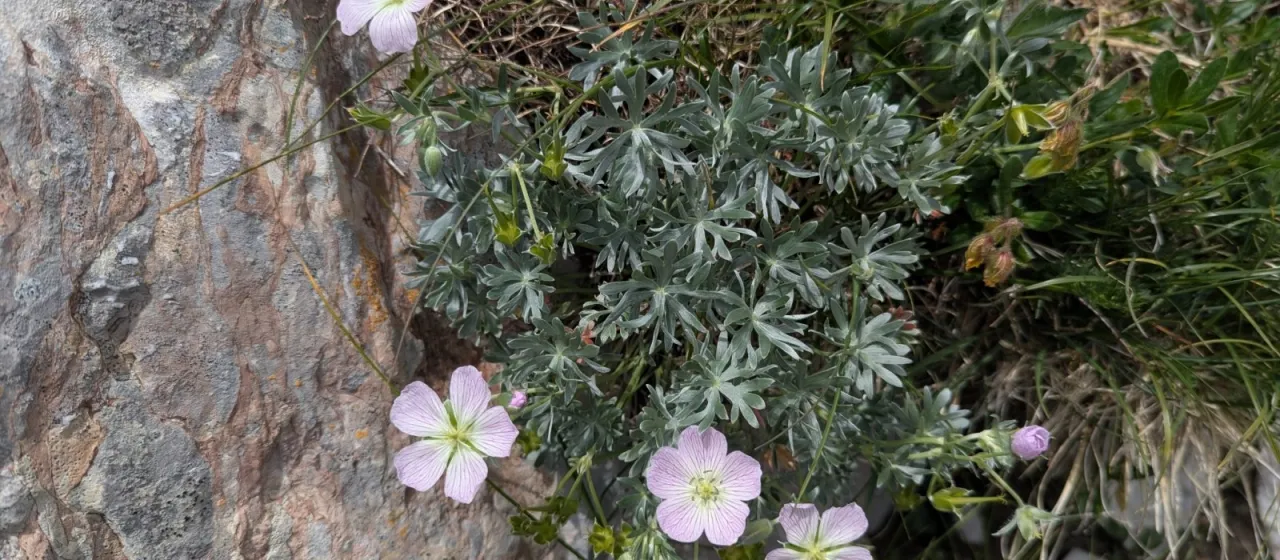
Description
Silver cranesbill (lat. Geranium argenteum) is a low-growing perennial herbaceous plant belonging to the Geraniaceae family. This species is highly prized by alpine enthusiasts for its unique silver-gray foliage and delicate, cup-shaped flowers that make it a standout choice for specialized garden beds.
The plant originates from the high-altitude regions of the Southern Alps, specifically in Italy and France. Its natural habitat includes limestone screes and rocky crevices at high elevations, which dictates its preference for well-drained, mineral-rich, and lime-containing substrates in a cultivated garden environment.
Botanically, the plant is characterized by a basal rosette of finely divided leaves covered in dense, silvery-white hairs. This pubescence is an adaptation to high solar radiation. The flowers are typically soft pink with distinct darker veins, blooming in early to mid-summer on short stalks that rise just above the foliage mound.
In terms of cultivation, Silver cranesbill requires a site with full sun exposure and poor, gritty soil. The primary rule of its agrotechnology is providing excellent drainage; the plant is extremely susceptible to root rot if moisture lingers around the crown, especially during winter months. It is unsuitable for heavy clay soils unless heavily amended with gravel.
- Requires full sun exposure.
- Prefers gritty, lime-based soil.
- Extremely drought tolerant once established.
- Must have excellent drainage to prevent rot.
Its primary agricultural and horticultural use is as an ornamental plant in rock gardens, scree beds, and stone troughs. While generally robust in the right conditions, it may suffer from root rot in humid environments. Pest issues are minimal, but it is essential to ensure the plant is not overshadowed by faster-growing neighbors that could restrict airflow and light.