
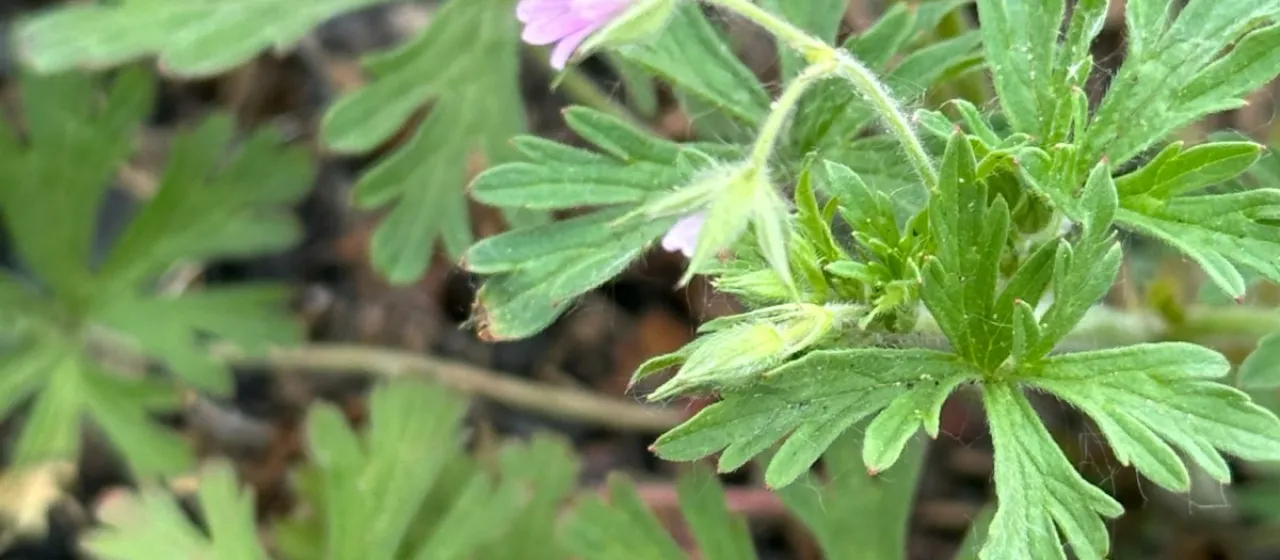
Description
Bicknell's crane's-bill (Geranium bicknellii) is a herbaceous plant species belonging to the family Geraniaceae. In agricultural environments, it is primarily identified as a weed, competing with field crops for essential resources such as nitrogen, water, and sunlight. Understanding its biological cycle is crucial for effective farm management.
The plant is native to North America and typically thrives in disturbed habitats, burnt-over areas, and open meadows. It is highly adaptable to various soil textures, ranging from sandy to loamy soils. Its ability to colonize fields quickly after soil disturbance makes it a frequent competitor in early-season crop development stages.
Morphologically, Geranium bicknellii is characterized by branched stems, glandular hairs, and palmately divided leaves. The flowers are relatively small, usually pink or purple, appearing in clusters. The fruit, a beaked capsule, uses an explosive mechanism to disperse seeds over considerable distances, which contributes to the plant's spread throughout arable land.
Regarding agrotechnical requirements, the plant prefers well-lit, open areas with moderate moisture. Agricultural control measures include crop rotation, mechanical weeding during fallow periods, and the application of pre-emergent or post-emergent herbicides. The key to management is preventing the plant from reaching the seed-production stage, which is the most aggressive phase of its life cycle.
- Monitor fields during early spring for germination.
- Implement proper tillage to reduce the seed bank.
- Use selective herbicides recommended for broadleaf weed control.
- Maintain soil health to increase crop competition.
While not a major commercial crop, its presence can lead to reduced crop yields if left uncontrolled. Pests and diseases such as aphids and various fungal rusts can affect the plant; however, these usually do not prevent it from being a persistent weed in diverse agricultural systems.