
Description
Bohemian cranesbill (Geranium bohemicum) is an annual herbaceous plant belonging to the Geraniaceae family. A defining biological feature of this species is its pyrophytic behavior; the seeds typically require heat stimulation, such as that provided by forest fires or soil clearing by burning, to break dormancy and successfully germinate in the field.
The natural range of this species is centered within European forest regions. It is an opportunistic colonizer, thriving in disturbed habitats like forest clearings, fire-affected areas, and lands where the canopy has been removed. Its ability to quickly establish itself in cleared spaces makes it a subject of interest in ecological restoration and land management studies.
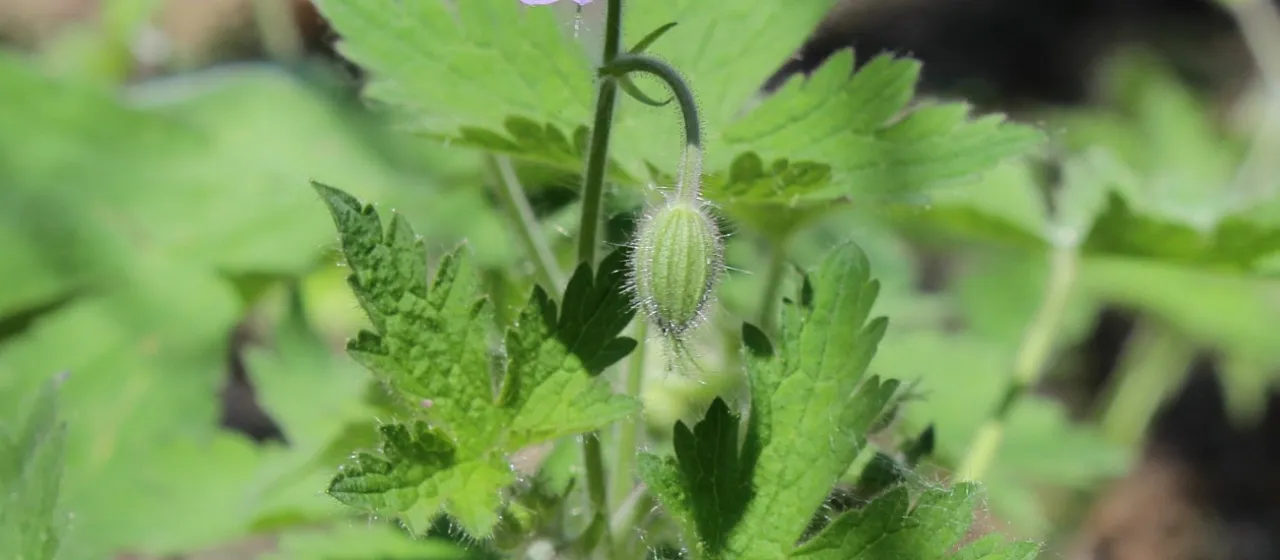
Botanically, the plant features branched stems and deeply lobed, palmately divided leaves covered in fine hairs. The flowers are typically violet or purple, blooming during the mid-summer season. The plant's root system is relatively shallow, requiring stable moisture levels in the topsoil to maintain healthy growth during its short life cycle.
Cultivation practices for Geranium bohemicum require careful management of soil conditions and site preparation. The soil should be well-drained, porous, and nutrient-rich. Since the plant is naturally adapted to high-light environments, it performs best in open, sunny conditions where competition from dense turf grasses is minimal and the soil structure is friable.
In terms of agricultural management and crop health, several factors should be monitored to ensure the survival and vigor of the plants:
- Preventing gray mold (Botrytis) during periods of excessive rainfall or poor air circulation.
- Managing spider mite infestations, which are common in hot, dry weather.
- Ensuring adequate spacing to prevent inter-plant competition for soil nutrients and light.