
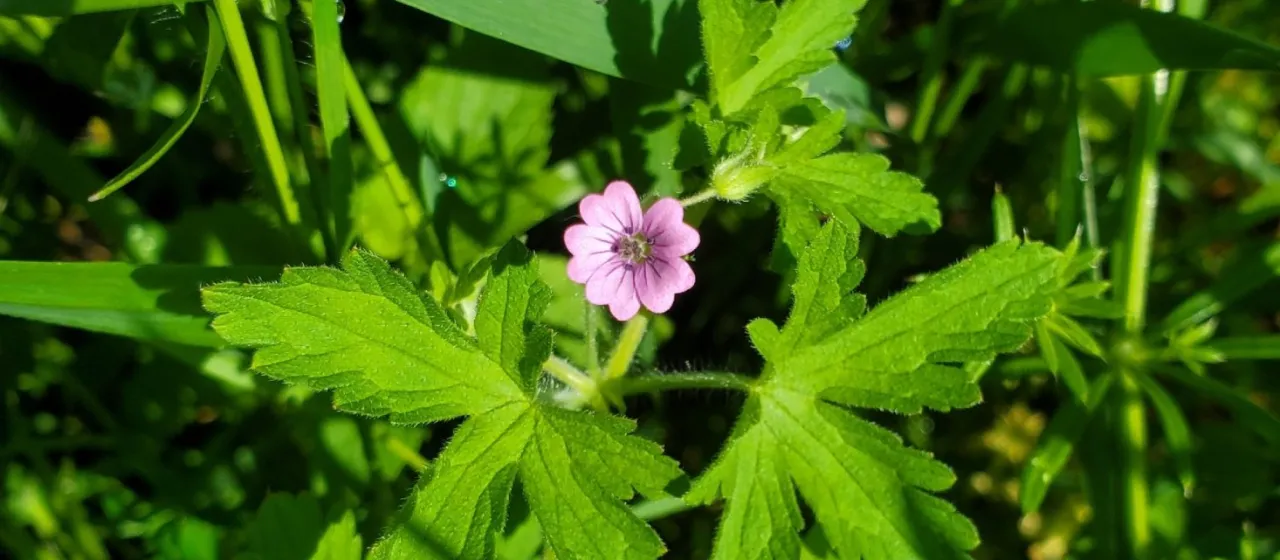
Description
Spreading cranesbill (Geranium divaricatum) is an annual herbaceous plant belonging to the Geraniaceae family. In the context of large-scale agriculture, this species is categorized as a weed that can invade arable lands, competing with essential crops for vital resources such as sunlight, water, and soil nutrients.
The species originates from Europe, the Caucasus, and Western Asia. It typically thrives in habitats such as forest edges, scrublands, and disturbed soil environments. It is not intentionally cultivated; however, its presence in field margins makes it a common invader of agricultural ecosystems, requiring constant monitoring during the growing season.
Botanically, it is identified by a sprawling, branched stem covered in glandular hairs and distinct palmately lobed leaves. During its active growth phase, it produces small pink to purple flowers. The fruit is a rostrum-shaped capsule which, when mature, bursts to disperse seeds efficiently across the surrounding field, ensuring the persistence of the seed bank.
Regarding agricultural requirements, the plant prefers fertile, well-drained soils but is highly adaptable to various climatic conditions. Management strategies primarily focus on mechanical control, such as pre-sowing tillage and regular cultivation. Chemical control via selective herbicides is also utilized in cereal and row-crop farming to prevent rapid infestations in early spring.
The economic impact of spreading cranesbill is predominantly negative in agricultural settings. The key concerns include:
- Direct competition for nitrogen and phosphorus with main crops.
- Increased risk of crop lodging due to high biomass density in field margins.
- Contamination of harvesting machinery and stored grain products.
Typical diseases affecting this plant include various fungal pathogens such as powdery mildew and leaf spot infections, which can spread to commercial crops under high humidity. Common pests include aphids and various leaf-eating beetles. Effective management of these pests on the weed population is crucial to preventing cross-contamination of nearby agricultural crops.