
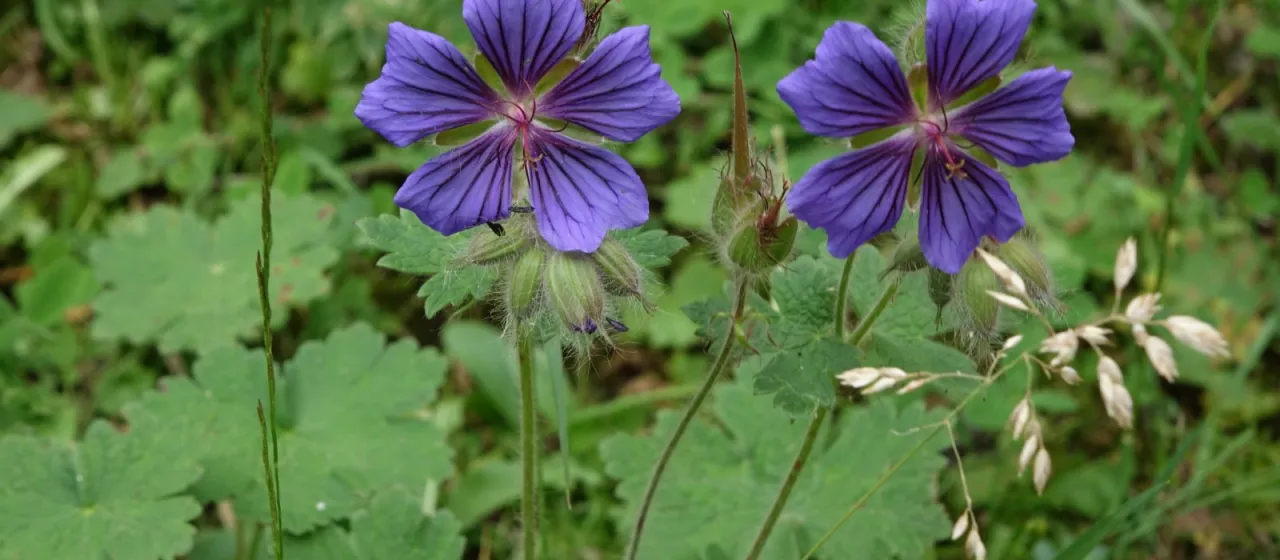
Description
The broad-petaled cranesbill (Geranium platypetalum) is a robust perennial herb belonging to the family Geraniaceae. This plant is highly regarded in horticulture for its stunning blue-purple flowers and lush foliage, making it a staple for low-maintenance perennial garden borders.
Originating from the mountain ranges of the Caucasus and Turkey, this species has adapted well to a wide range of temperate climates globally. Its natural habitat is characterized by meadows and forest margins, which informs its preference for stable, well-draining garden soils in cultivated settings.
Botanically, the plant is distinguished by its basal rosette of deeply lobed, hairy leaves and prominent, open-faced flowers that bloom in early to mid-summer. The plant typically reaches a height of 40 to 50 centimeters and forms dense, vigorous clumps, which effectively suppress weed growth in the surrounding area.
In terms of agrotechnics, Geranium platypetalum requires a spot with full sun to partial shade. The soil should be fertile, moist, but not prone to waterlogging. Regular maintenance involves deadheading after the primary bloom cycle, which encourages secondary flowering and keeps the plant looking tidy throughout the season.
Its primary use is in landscape design, where it serves as an excellent ground cover for mass plantings or as a filler in cottage-style gardens. While generally robust, gardeners should watch for signs of fungal infections like powdery mildew, which can occur in poorly ventilated areas. Keeping the foliage dry during irrigation helps mitigate these common threats.