
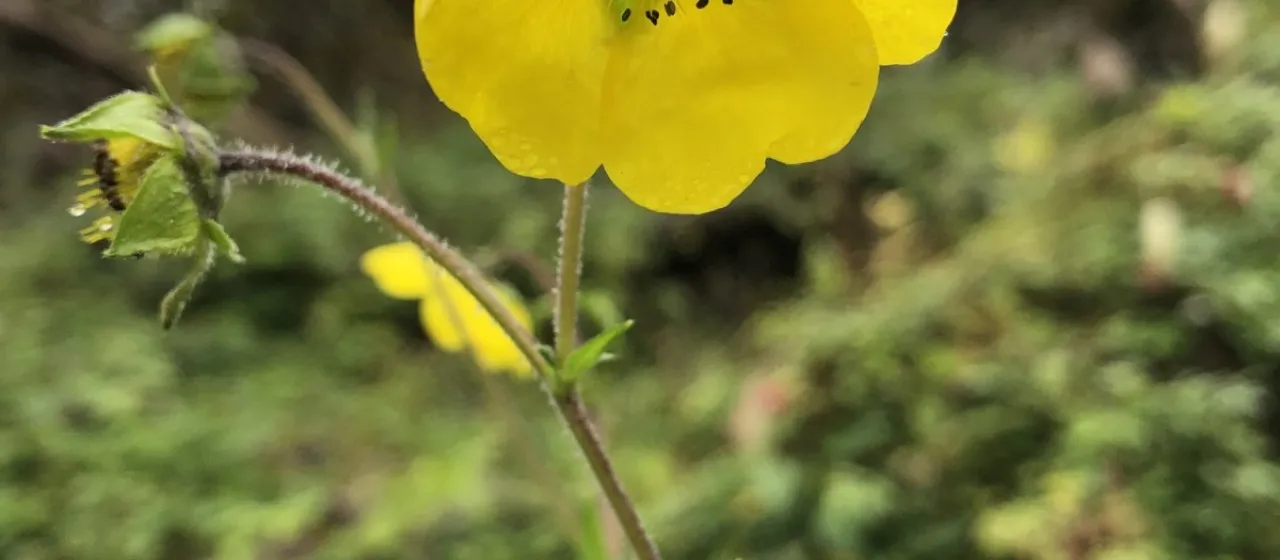
Description
Tall avens (Geum elatum) is a herbaceous perennial plant belonging to the Rosaceae family. This species is native to high-altitude mountainous regions, where it has evolved to thrive in challenging environments characterized by temperature fluctuations and varied soil compositions. Its inherent resilience makes it a subject of interest for both professional gardeners and botanical researchers.
The native range of Geum elatum primarily extends across the mountainous regions of Asia, including the Himalayan range. In these natural habitats, it benefits from cool temperatures and well-drained slopes. When cultivated in private gardens or nurseries, it generally adapts well to temperate regions provided that the specific environmental needs for drainage and aeration are satisfied.
Botanically, the plant develops a rosette of pinnate leaves from which sturdy stalks emerge to support its flowers. The blossoms are typically yellow, providing a bright visual contrast against the green foliage. Its root system is deep and fibrous, which helps the plant stabilize itself in mountain soils and efficiently utilize deep-seated moisture and nutrients during the active growth phase.
Effective agrotechnical practices for tall avens include planting in well-drained, nutrient-rich, neutral-to-slightly-acidic soil. While the plant appreciates regular moisture, waterlogging must be avoided to prevent fungal infections. Maintenance involves regular weeding and the application of a balanced fertilizer during the early spring to promote healthy development and sustained floral production.
In terms of practical use, Geum elatum is most valued as a high-quality ornamental plant for rock gardens, borders, and informal planting schemes. While generally robust, the plant can be susceptible to common garden issues such as powdery mildew in poorly ventilated conditions. Regular monitoring for pests and proper plant spacing are critical management strategies to ensure a healthy and thriving crop.
- Family: Rosaceae.
- Life cycle: Herbaceous perennial.
- Soil preference: Well-drained, fertile soil.
- Growth habit: Rosette-forming with upright stalks.
- Landscape usage: Rock gardens, alpine displays, and perennial borders.