
Description
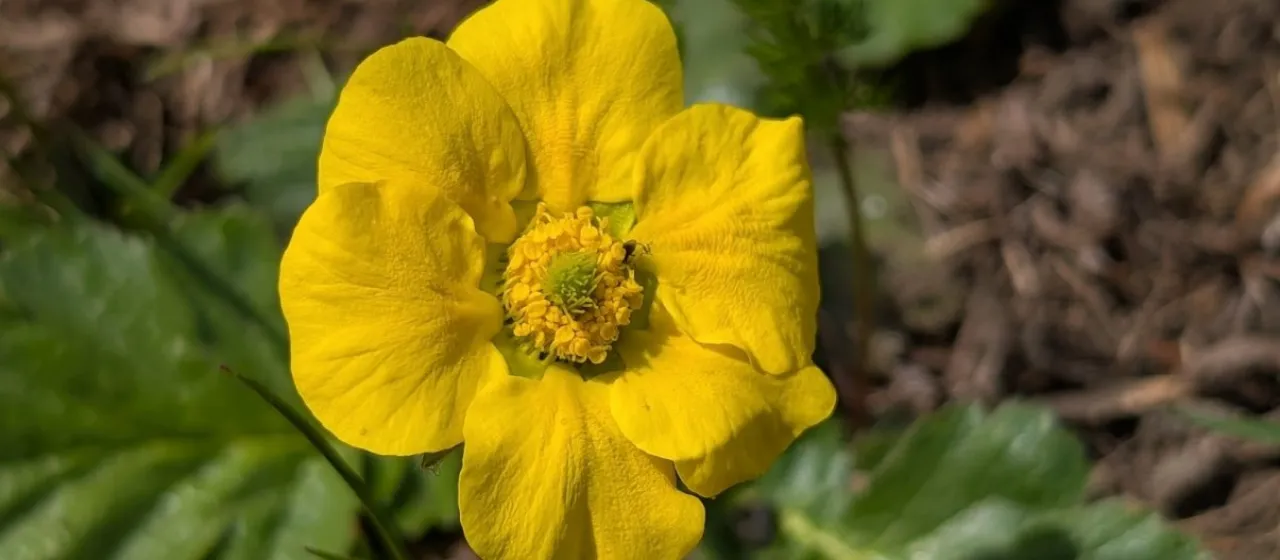
Mountain avens (Geum montanum) is a perennial herbaceous plant belonging to the Rosaceae family. In agricultural and horticultural contexts, it is highly valued for its ability to thrive in challenging, elevated environments while providing consistent and vibrant early-season blooms.
Native to the mountain ranges of Europe, including the Alps and the Carpathians, this species is naturally adapted to rocky, high-altitude meadows. Its cultivation range has expanded to cooler temperate regions, where it is favored by gardeners for rock gardens and borders requiring low-maintenance perennial coverage.
Botanically, the plant is characterized by a basal rosette of pinnate leaves and solitary, large, bright yellow flowers. Its robust, creeping rhizome allows the plant to stabilize itself in rocky or gravelly substrates. It typically reaches a modest height, making it an ideal choice for the foreground of landscaping compositions.
Regarding agrotechnical requirements, the plant demands well-drained, nutrient-rich, but light soils. It performs best in full sun or partial shade. Overwatering and heavy clay soils must be avoided to prevent root rot, which is the most critical factor in successful cultivation. Periodic division of the clumps every 3–4 years helps maintain plant vigor.
The primary use of Geum montanum is ornamental. It is highly resistant to major pests, though occasionally aphids may colonize the flower buds in dense plantings. Proper soil drainage and avoiding overcrowded conditions are the best preventative measures against fungal pathogens like powdery mildew or root decay.