
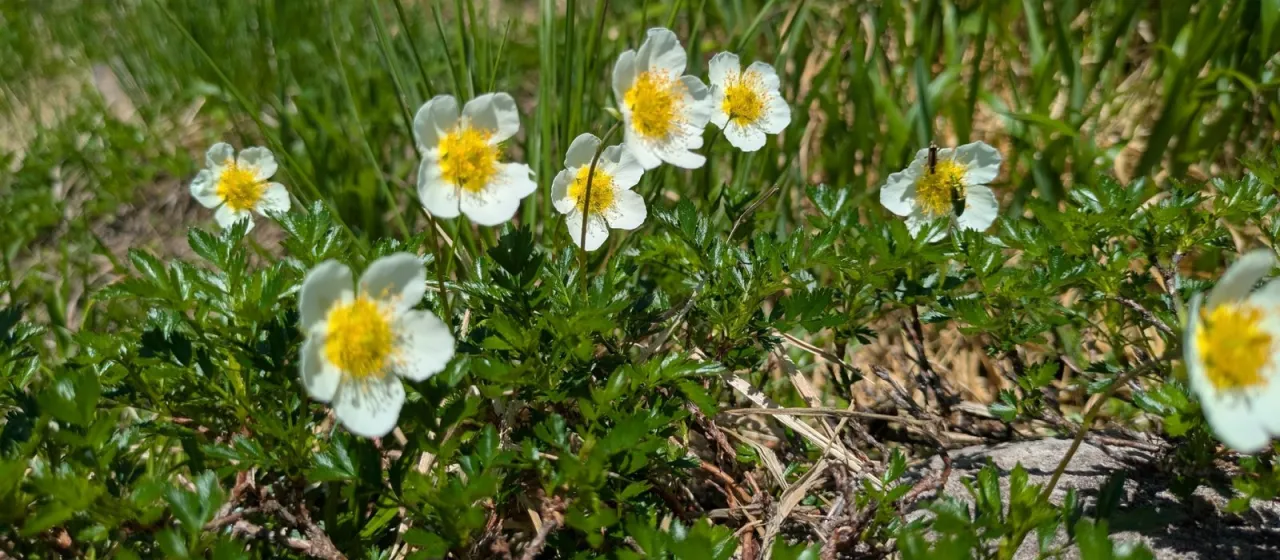
Description
Geum pentapetalum, also historically classified as Sieversia pentapetala, is a perennial herbaceous plant belonging to the Rosaceae family. This species is highly regarded for its alpine characteristics and is a prized specimen in specialist horticulture due to its unique appearance and resilience in high-altitude environments.
The plant originates from the mountainous and arctic regions of East Asia, including Japan, the Kuril Islands, and the Russian Far East. Its natural habitat consists of rocky slopes and snowbeds, where the climate is characterized by short summers and long, harsh winters. This evolutionary background makes the plant exceptionally hardy in temperate garden zones.
Botanically, Geum pentapetalum is distinguished by its compact basal rosettes of leathery, pinnate leaves. During the spring and early summer, it produces delicate white or creamy flowers with five prominent petals. The plant is further characterized by its feathery, persistent styles on the fruit, which add a unique textural element to the plant long after the petals have fallen.
Cultivation requirements demand attention to drainage and soil structure. To thrive, the plant requires gritty, well-draining soil with a neutral to slightly acidic pH. It performs best in cool climates or protected spots in gardens where it can receive bright light without the intensity of scorching midday heat. Excessive soil moisture during the dormant season is detrimental and should be avoided through site preparation.
The primary use of Geum pentapetalum is ornamental, specifically within the architecture of alpine gardens, screes, and rockeries. It is a low-maintenance plant once established, provided its ecological preferences are met. Common pests include aphids during dry spells, and fungal leaf spots may occur if the foliage does not dry out sufficiently after precipitation.