
Description
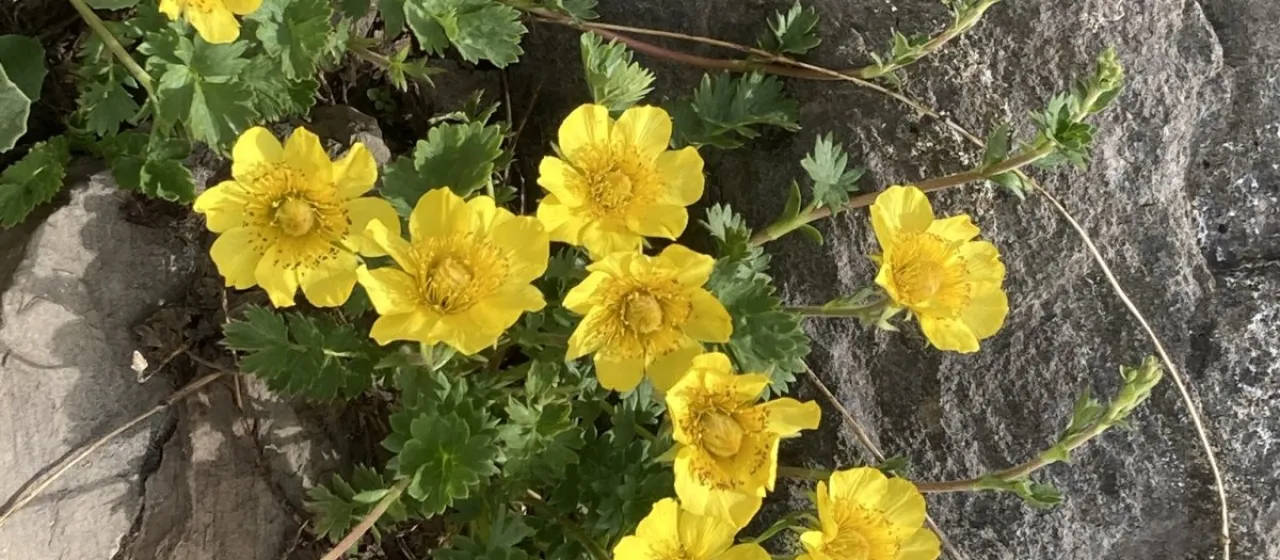
Creeping avens (Geum reptans) is a perennial herbaceous plant belonging to the Rosaceae family. It is a highly resilient species perfectly adapted to alpine environments, characterized by its ability to spread vegetatively through long, above-ground runners or stolons, which help it colonize rocky terrain.
The plant originates from the high-mountain regions of Europe, specifically the Alps and the Carpathians. In its natural habitat, it thrives in stony screes, moraines, and alpine meadows, where it has evolved to withstand short growing seasons and extreme daily temperature fluctuations.
Botanically, it is distinguished by a basal rosette of pinnate leaves and large, bright yellow, solitary flowers. A key feature is the production of long, creeping stems that bear daughter rosettes at their tips, allowing the plant to anchor itself firmly into the substrate and rapidly expand its territory.
Cultivation requirements focus on excellent drainage, as the species is highly susceptible to root rot if waterlogged. It prefers light, slightly acidic to neutral stony soils and full sun exposure. In horticultural practice, it is prized for its extreme winter hardiness and its striking aesthetic value during the early summer flowering period.
The primary agricultural and horticultural use of creeping avens is in landscape design, specifically for rock gardens and slope stabilization. Common issues include fungal infections due to excessive moisture, while potential pests are limited to occasional infestations of aphids or spider mites, which can be managed with standard maintenance protocols.