
Description
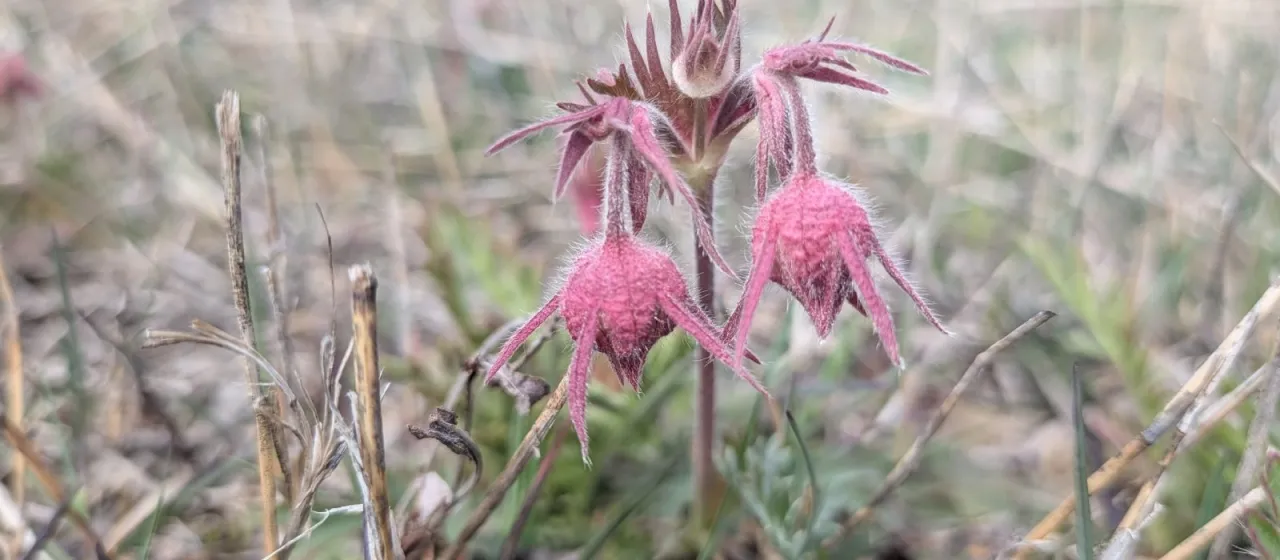
Prairie smoke, known by its scientific name Geum triflorum, is a perennial herbaceous plant belonging to the Rosaceae family. The plant is widely recognized for its unique, feathery, plume-like seed heads that appear after the flowering stage, creating a smoky, ethereal appearance in the garden landscape. It typically grows as a basal rosette of finely divided, fern-like leaves.
The plant is native to North America, where it naturally inhabits prairies, meadows, and rocky slopes. Because of its adaptability to diverse and sometimes harsh environments, it is highly valued as an ornamental species in landscape design. It is particularly effective for xeriscaping, rock gardens, and areas that mimic natural wildflower meadows.
Botanical characteristics include upright flowering stems that produce small, nodding, bell-shaped flowers with pink to reddish-purple sepals. As the flower matures, the style of the pistil elongates into a long, plumose, silky plume. These plumes are the most prominent feature, persisting on the plant for several weeks throughout late spring and early summer.
Regarding cultivation, Geum triflorum thrives in full sun and requires well-drained, sandy or gravelly soils. It is notably drought-tolerant once established and does not perform well in waterlogged, heavy clay soils. It is hardy in cold climates, making it an excellent choice for northern regions where other ornamental plants might struggle during winter months.
The standard maintenance routine includes minimal intervention, such as removing old foliage in early spring to encourage new growth. The species is relatively resistant to serious diseases, although crown rot may occur in overly wet, poorly drained soil. Pest management is rarely necessary, though regular monitoring for aphids is a good preventive practice in garden settings.