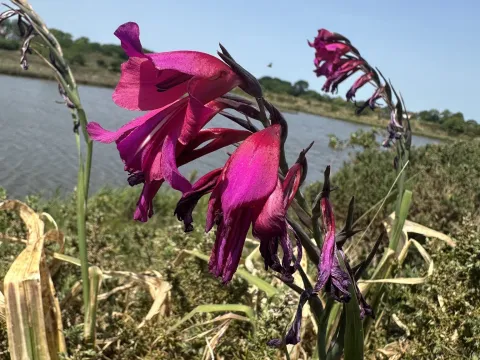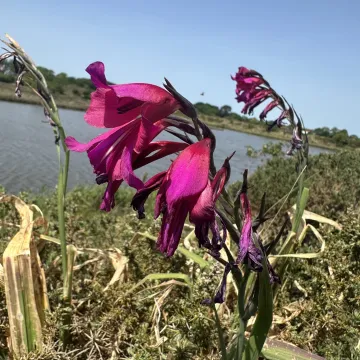

Byzantine gladiolus
Gladiolus communis L.
Description
The Byzantine gladiolus (Gladiolus communis) is a perennial bulbous plant belonging to the Iridaceae family. Unlike modern hybrids, this species is prized for its graceful, natural appearance, making it a sophisticated choice for traditional perennial borders and wildflower-style landscapes.
The plant is native to the Mediterranean region, with its natural range extending from Southern Europe to parts of North Africa and Western Asia. It is known for its hardiness in milder climates, often proving more resilient and easier to maintain in garden settings compared to the more sensitive large-flowered gladiolus cultivars.
Botanically, it features a corm that produces a slender stem, typically reaching heights between 60 and 100 centimeters. The foliage is sword-shaped and glaucous green. Its most striking feature is the inflorescence: a one-sided spike of deep magenta-pink, funnel-shaped flowers, often distinguished by a thin, white, central stripe on the petals.
Regarding soil and climate, the Byzantine gladiolus thrives in well-drained, fertile soil with a neutral to slightly acidic pH. It performs best in full sun but can tolerate light partial shade. Planting should be timed to allow for good root establishment. While it appreciates consistent moisture during the spring growth phase, it requires relatively dry conditions during its summer dormancy.
Common issues affecting this species include fungal infections such as Fusarium wilt and botrytis, particularly in areas with poor drainage. Insect pests like thrips can also cause damage to the leaves and developing flower spikes. Regular monitoring, proper site preparation, and the use of insecticidal soaps or fungicides when necessary are essential for keeping the plants healthy.
Photo gallery