
Description
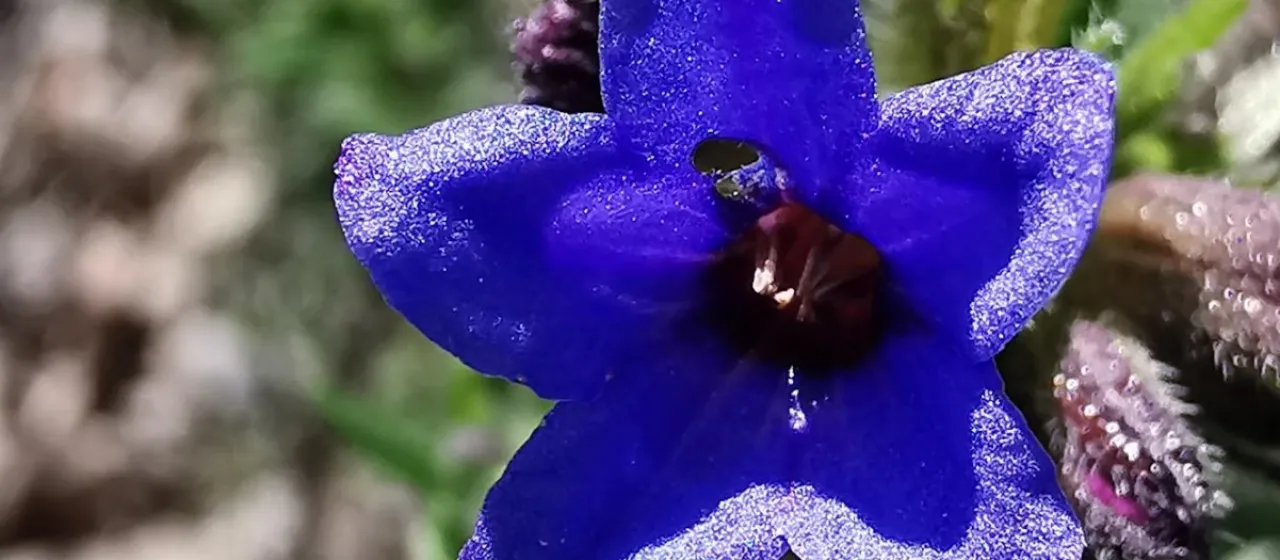
Glandora diffusa, historically recognized as Lithodora diffusa, is a popular evergreen perennial shrub belonging to the Boraginaceae family. It is highly valued in horticulture for its spectacular, intense blue flowers that bloom abundantly in spring, creating a carpet-like effect over its sprawling, low-growing foliage.
Originating from the mountainous regions of Southern Europe, specifically Spain, Portugal, and France, this plant has adapted to survive in harsh rocky environments. Its natural habitat suggests a preference for well-drained, acidic soil conditions, which remains a primary requirement for successful cultivation in garden settings today.
Botanically, the plant features prostrate stems that typically reach a height of no more than 20–30 cm, spreading horizontally over time. The leaves are small, lance-shaped, and possess a slight pubescence that protects them from dry winds and excessive transpiration. The flowers are distinctively star-shaped, often showing deep blue or sometimes purplish hues.
The agrotechnical requirements for this crop focus primarily on soil chemistry and drainage. It strictly requires acidic soil to prevent chlorosis, and gardeners often incorporate peat or specialized Ericaceous compost to maintain pH levels. It thrives in full sun, though in warmer climates, it appreciates some afternoon shade to mitigate heat stress.
In practice, Glandora diffusa is predominantly utilized as a ground cover in rock gardens, wall crevices, and borders. While generally robust, it is susceptible to root rot if soil drainage is insufficient. Common pests are minimal, though plants may occasionally be attacked by aphids or spider mites if stressed by poor environmental conditions or improper watering regimes.