
Description
Glandora oleifolia is a perennial evergreen subshrub belonging to the family Boraginaceae. Formerly categorized within the genus Lithodora, this species is now classified under its own genus due to specific floral and anatomical traits. The plant is highly valued for its compact growth habit and its ability to thrive in challenging, rocky environments.
Native to specific regions in Europe, particularly Spain, this species is typically found in mountainous areas, limestone cliffs, and rocky outcrops. Its natural habitat suggests that the plant has evolved to handle nutrient-poor soils and significant exposure to sunlight, making it a robust candidate for specialized landscaping and rock gardens.
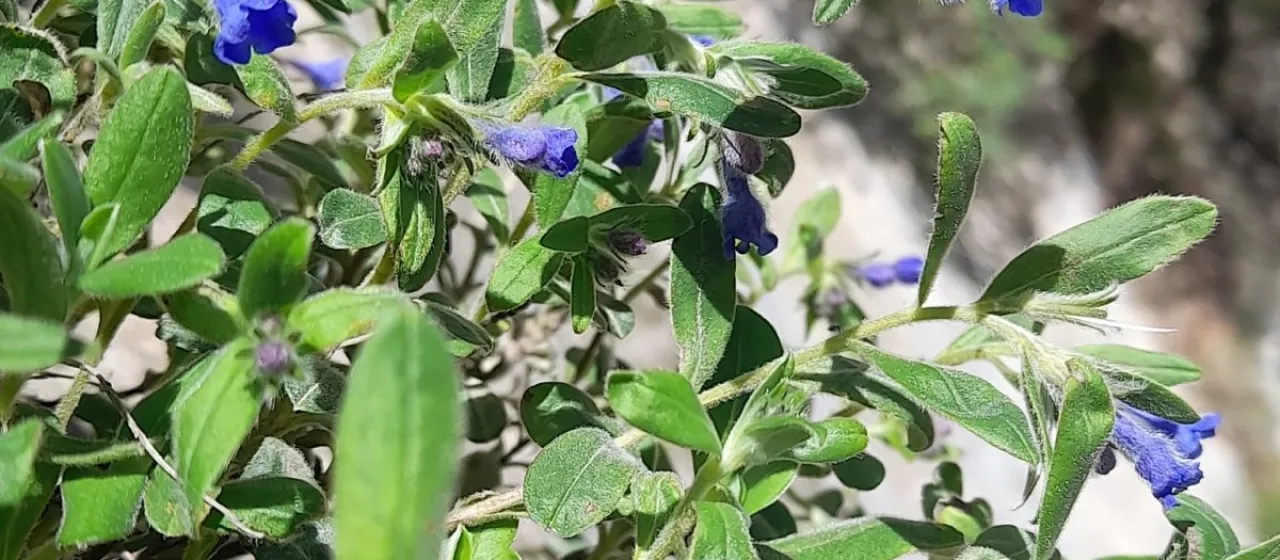
Botanically, the plant is named for its foliage, which consists of leathery, olive-shaped leaves. During the blooming season, it produces striking, vibrant blue flowers clustered at the ends of its stems. The root system is quite extensive for the size of the plant, allowing it to anchor securely in cracks and crevices in its native stony landscapes.
Cultivation requires careful attention to drainage. Glandora oleifolia is extremely susceptible to root rot if placed in heavy, waterlogged soil. It performs best in well-draining, neutral to alkaline substrates. Providing a sunny location is essential for maintaining the plant's structural integrity and ensuring a dense, floriferous display during the spring months.
- Requires full sun exposure.
- Thrives in alkaline, gritty soil.
- Extremely drought-tolerant once established.
- Minimal fertilization needed.
In terms of usage, this plant is primarily ornamental, serving as a staple in alpine gardens, rockeries, and xeriscaping projects. Aside from fungal issues related to poor drainage, the plant is relatively low-maintenance. Gardeners should monitor for common pests like aphids during the early growth stages, but otherwise, it remains a hardy and beautiful addition to any dry landscape.