
Description
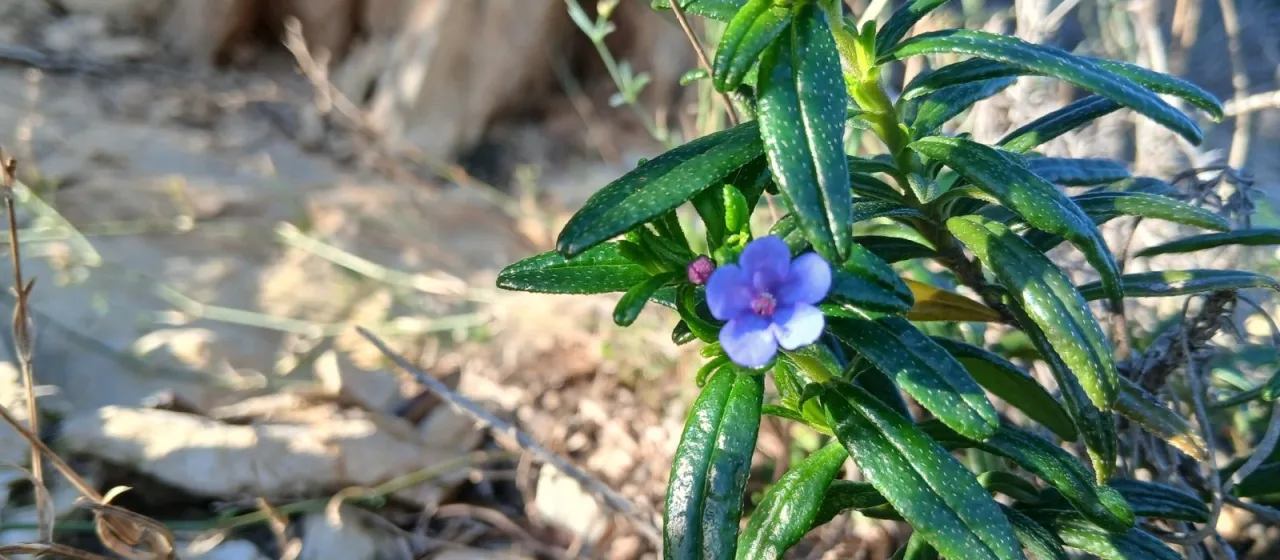
Glandora rosmarinifolia is an evergreen subshrub belonging to the Boraginaceae family. Previously classified under the genus Lithodora, this plant has been reclassified into the Glandora genus based on recent botanical studies. It is widely recognized for its compact growth habit and vivid, intensely blue flowers that bloom abundantly.
Originating from the Mediterranean region, specifically Southern Europe and parts of Italy, this plant is naturally adapted to rocky, calcareous terrain. This evolutionary history makes it highly suitable for gardens with challenging, nutrient-poor, or rocky soil conditions where other ornamental plants might struggle to establish themselves.
The botanical profile of the plant includes narrow, rosemary-like leaves that remain green throughout the year. The flowers are trumpet-shaped, typical of the Boraginaceae family, and provide a brilliant display of color. The plant’s structure is woody at the base, creating a sturdy frame that supports its dense, sprawling foliage.
Cultivation requirements focus heavily on drainage. Glandora thrives in well-drained, slightly alkaline soil and requires full sun exposure to achieve maximum flowering potential. It is sensitive to waterlogged conditions, which can lead to rapid root decay, so planting on slopes or in prepared raised beds is often the best agricultural practice.
- Requires full sun to partial shade.
- Prefers gritty, well-draining soil.
- Avoid over-fertilization to maintain compactness.
- Best suited for rock gardens and borders.
In terms of usage, the plant is a staple for rock gardens, container gardening, and xeriscaping. It is generally resistant to most pests; however, aphids and spider mites can occasionally appear in stressful environmental conditions. Proper spacing to ensure airflow is the most effective cultural method to prevent fungal pathogens.