
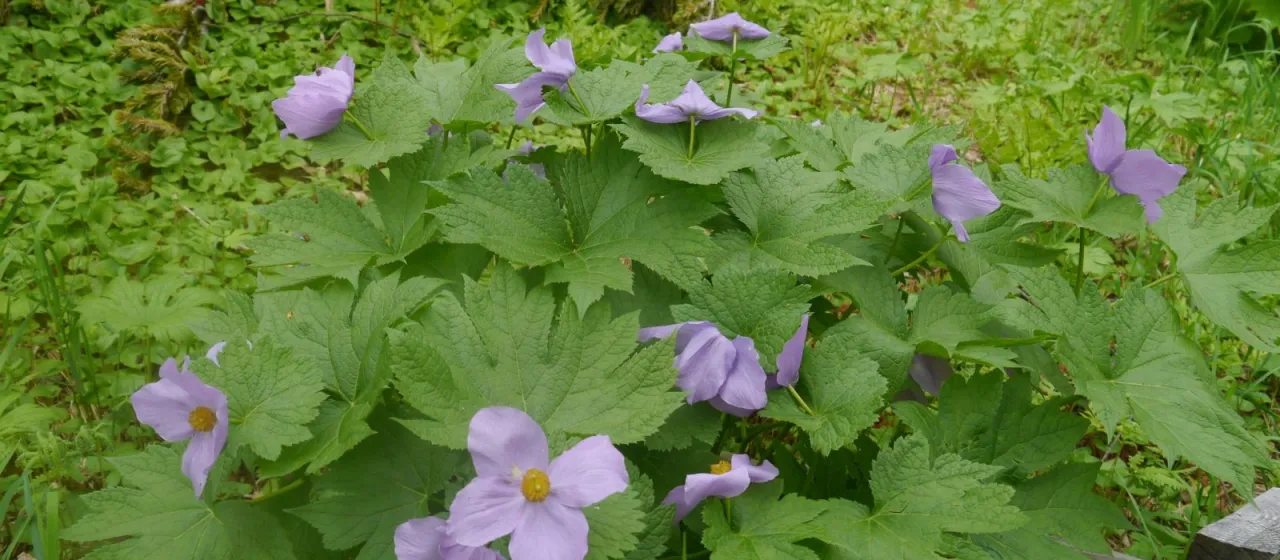
Description
Glaucidium palmatum, often referred to as the Japanese wood poppy, is a rare perennial herbaceous plant belonging to the monotypic family Glaucidiaceae. Despite its resemblance to the buttercup family, it holds a distinct botanical status, making it a highly prized specimen for connoisseurs of botanical rarities and woodland-style gardens.
Native to the mountainous forest regions of Japan, this plant has adapted to temperate, moisture-rich environments. Its natural habitat is typically under the dense canopy of deciduous trees, where temperatures remain relatively cool and the air humidity is consistently high, conditions that are critical for successful cultivation in garden settings.
The plant is characterized by its broad, palmately lobed leaves that unfurl in early spring, creating a lush, leafy mound. The highlight of the plant is its large, cup-shaped flowers, which typically bloom in shades of pale violet or soft pink. These blossoms possess a delicate, papery texture and an intricate arrangement of stamens, providing high aesthetic value.
For optimal growth, Glaucidium palmatum requires specific soil conditions: a rich, well-draining, yet moisture-retentive substrate, preferably with a slightly acidic pH. It performs best in partial shade, as direct sunlight can scorch the foliage. Consistent irrigation is essential throughout the growing season, and the soil must never be allowed to dry out completely.
In landscape design, this species is used primarily for ornamental purposes in shade gardens. The plant is relatively hardy but requires protection from pests like slugs and snails, which are particularly fond of its succulent foliage. Growers must also monitor soil drainage carefully to prevent root rot, as the plant is sensitive to waterlogged conditions during the winter dormancy period.