
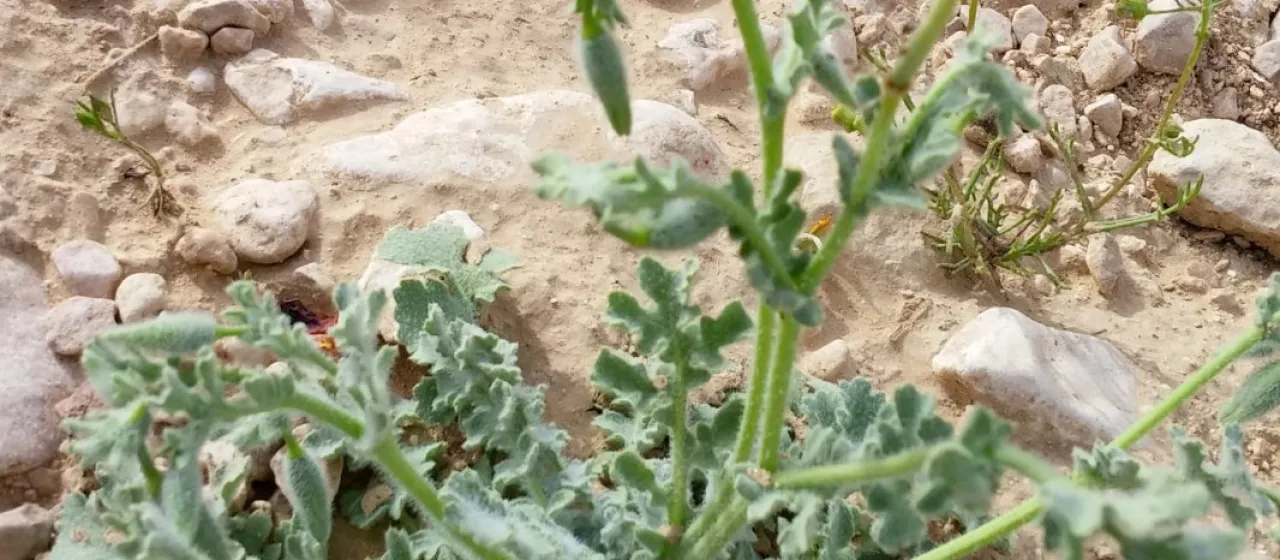
Description
Glaucium arabicum is a herbaceous plant belonging to the Papaveraceae (poppy) family. As a specialized agricultural crop, it is primarily studied for its secondary metabolites, which serve as valuable precursors in the pharmaceutical industry. The species is recognized for its unique chemical profile that distinguishes it within the genus Glaucium.
The native range of this species extends across the arid and semi-arid regions of the Middle East and Central Asia. The plant is evolutionarily adapted to environments with low annual precipitation and high thermal variability. In a cultivation setting, it thrives in rocky, calcareous, or sandy substrates, mimicking its natural ecological niche.
Botanically, Glaucium arabicum is characterized by its glaucous, deeply divided leaves and distinct flowers, which typically display vibrant yellow or orange hues. The plant develops a robust taproot system, which is a critical adaptation for surviving prolonged drought conditions, allowing the crop to extract moisture from deeper soil horizons.
Agronomic requirements are focused on soil aeration and light availability. The crop requires well-drained soils to prevent root pathogen buildup, as it is highly sensitive to waterlogging. It is best suited for regions with high sunshine hours and moderate temperatures during the growth cycle, ensuring that both vegetative development and seed maturation occur efficiently.
Primary use is oriented toward the extraction of alkaloids like glaucine, which are utilized for their therapeutic properties. Potential growers should be aware of the following management challenges:
- Root rot (Phytophthora/Pythium species) due to excess moisture.
- Aphid infestations affecting tender young stems and leaves.
- Sensitivity to high humidity, which can lead to foliage blight.