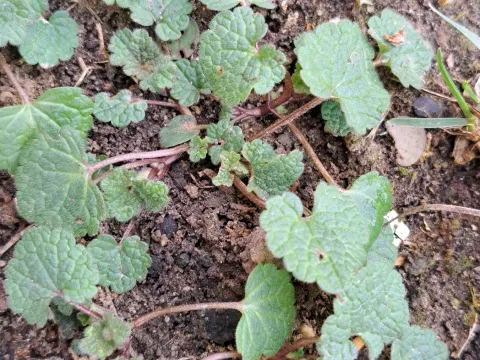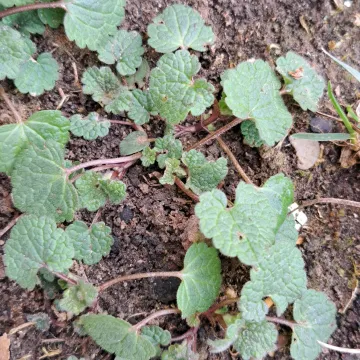
Ground ivy
Glechoma hederacea L.
Description
Ground ivy (lat. Glechoma hederacea L.) is a perennial herbaceous plant belonging to the Lamiaceae family. Often recognized as a vigorous ground cover, it is valued in horticulture for its ability to suppress weeds and create a dense, green carpet in shaded areas where other lawn grasses struggle to thrive.
Originating from Europe and Asia, this plant has naturalized throughout much of the temperate world. It adapts to a wide range of environments, but it thrives best in moist, fertile soils that receive partial to full shade. Its growth pattern involves creeping stems that root at the nodes, allowing it to spread rapidly across the landscape.
Botanically, the plant is characterized by its scalloped leaves and small, funnel-shaped, violet-blue flowers that appear in spring. The plant produces a unique aromatic scent when crushed, which is attributed to its high concentration of volatile oils. Its shallow, fibrous root system is effective at stabilizing topsoil.
Cultivation of ground ivy requires minimal intervention, though it can become invasive if not monitored. It prefers consistently moist conditions and can tolerate occasional mowing, which helps maintain a uniform appearance.
- Requires partial shade for optimal growth
- Thrives in well-drained but moist soil
- Easy to propagate by division or cuttings
Economically, ground ivy has historical importance in herbal medicine and brewing, where it was once used to clarify beer. In modern agriculture and gardening, it serves as a nectar source for early-season pollinators. While generally robust, gardeners should look out for powdery mildew in areas with poor air circulation or excessive soil moisture.
Photo gallery