
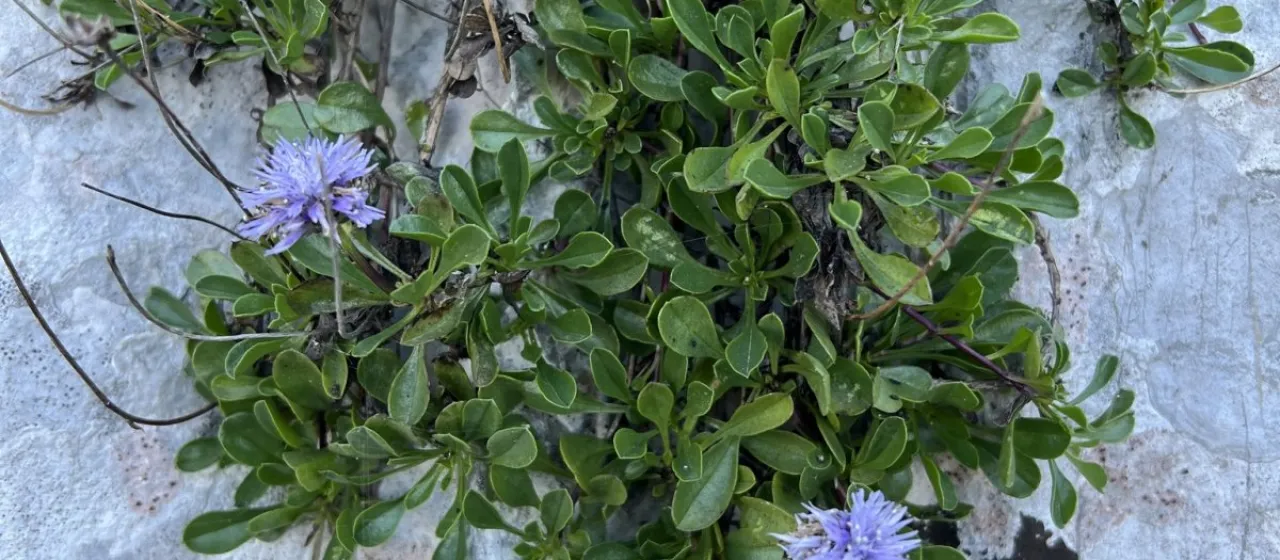
Description
Globularia meridionalis is a low-growing perennial herb belonging to the Plantaginaceae family. In horticultural practice, it is recognized as a specialty ornamental crop that creates dense, mat-forming carpets of glossy, dark green foliage, which remain attractive throughout the growing season.
The species originates from the mountainous regions of Southern Europe, particularly inhabiting rocky landscapes and alpine meadows. This native environment has equipped the plant with significant resilience, allowing it to thrive in nutrient-poor conditions and rocky terrain, making it an excellent candidate for specialized landscaping projects.
Botanically, the plant is characterized by its basal rosettes of spathulate leaves. During late spring and early summer, it produces short flower stems, ranging from 5 to 15 centimeters in height, topped with distinct, globe-shaped inflorescences of brilliant blue color. These flowers are highly valued for their compact form and vibrant hue.
Successful cultivation requires full sun exposure and exceptional soil drainage. The plant is well-suited to gritty, alkaline, or neutral substrates. In terms of agronomy, it is crucial to avoid waterlogged conditions, as the root system is highly susceptible to rot, especially during winter months when ambient moisture levels are higher.
Its primary use is in ornamental horticulture, specifically for rock gardens, scree beds, and as an edging plant in alpine garden designs. While generally robust, the plant can be affected by fungal diseases if humidity is too high. Common pests include slugs and snails, which may graze on the foliage, requiring standard monitoring and integrated pest management practices.