
Description
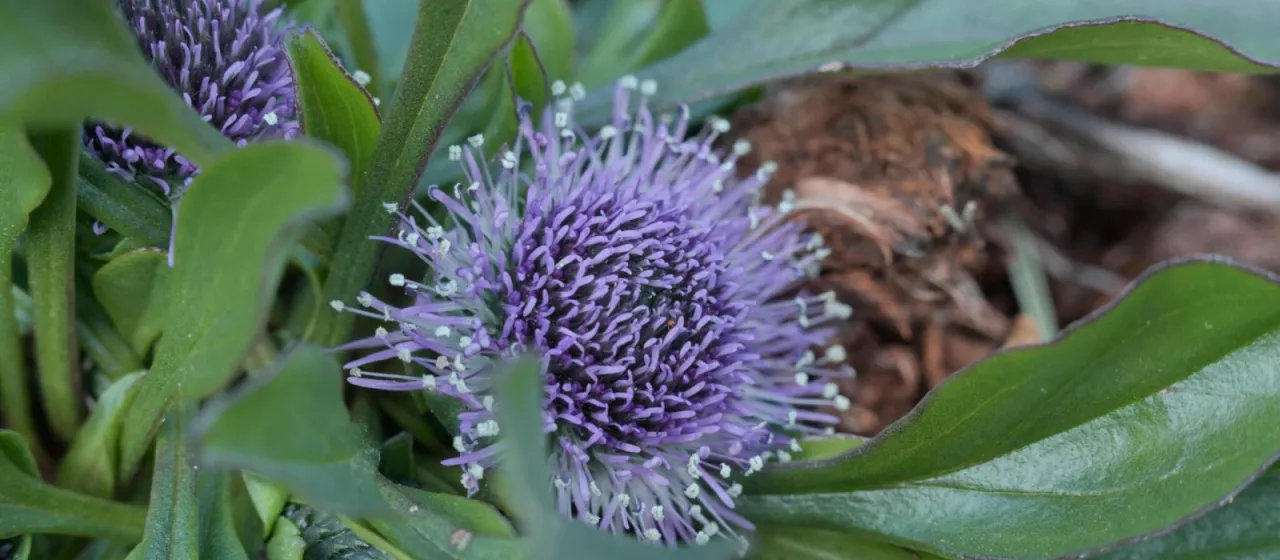
Common globe daisy (Globularia punctata) is a perennial herbaceous plant belonging to the Plantaginaceae family. It is widely recognized in horticulture for its neat, mound-forming habit and unique spherical inflorescences that provide a distinctive aesthetic to garden compositions.
Originating from the mountainous regions of Central and Southern Europe, this species is naturally adapted to limestone soils and rocky outcrops. This lineage makes it an ideal candidate for cultivation in alpine gardens, rockeries, and arid landscape designs where other plants might struggle.
The botanical structure of the plant features a basal rosette of leathery, evergreen-like foliage. The plant reaches a modest height, producing stiff flowering stems that hold vibrant, globe-shaped blue or violet blossoms. These blooms are composed of numerous small tubular florets, giving them their characteristic fuzzy appearance.
Cultivation requires full sun exposure and gritty, well-drained soil with a neutral to alkaline pH level. Globularia punctata is remarkably drought-tolerant once established but strictly avoids wet winter conditions, which can lead to crown rot. Light supplemental watering is recommended only during prolonged heatwaves.
The plant is primarily utilized in ornamental horticulture as a ground cover or rock garden feature. It is generally resistant to pests, though snails may feed on the foliage during cool spring months. Proper site selection—specifically ensuring excellent drainage—remains the most important factor in preventing root diseases and ensuring long-term health.