
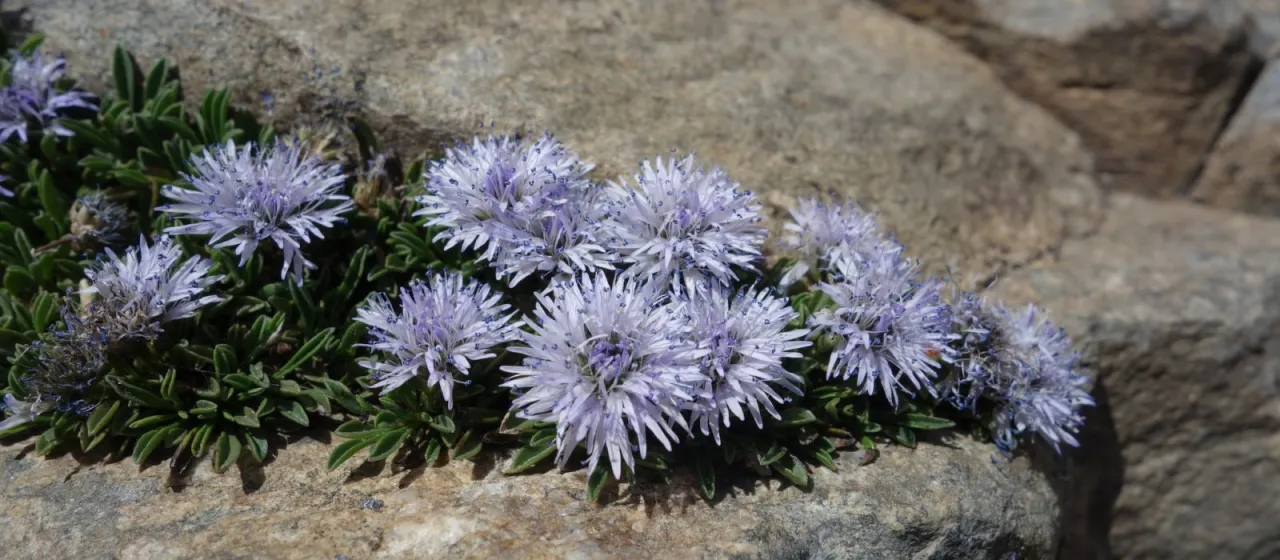
Description
Globularia repens, commonly known as the creeping globularia, is a perennial plant belonging to the Plantaginaceae family. This low-growing, mat-forming shrublet is highly valued in horticulture for its ability to create dense, vibrant ground cover that thrives in challenging alpine conditions.
The plant originates from the mountainous regions of Southern Europe, specifically within the Pyrenees and the Alps. It is naturally adapted to harsh, rocky environments, growing effectively in limestone crevices and gravelly substrates. This evolutionary history makes it an exceptionally hardy candidate for temperate climate gardens.
Botanically, Globularia repens is characterized by its woody, creeping stems and small, leathery leaves that form compact rosettes. During the late spring and early summer, the plant produces distinctive spherical flower heads. These globe-shaped inflorescences, typically ranging in color from soft blue to light lavender, rise just a few centimeters above the foliage.
Successful cultivation requires environmental conditions that mimic high-altitude ecosystems. It demands full sun exposure and a well-drained, alkaline to neutral soil composition. The use of gritty or gravelly soil mixes is essential to prevent root rot, as the plant is highly sensitive to waterlogged conditions, particularly during the dormant winter period.
In landscaping, it is primarily used in rock gardens, scree beds, and as a border plant for alpine displays. Maintenance involves keeping the area free of weeds and ensuring that the plant is not overwhelmed by more vigorous species. Typical issues include fungal infections caused by excessive moisture and potential damage from pests if the drainage is inadequate.