Glory Pea
Clianthus puniceus (G. Don) Soland. ex Lindl.
Description
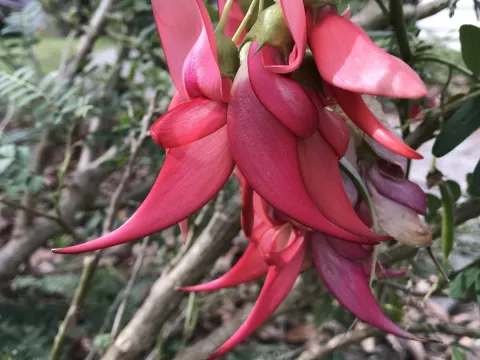
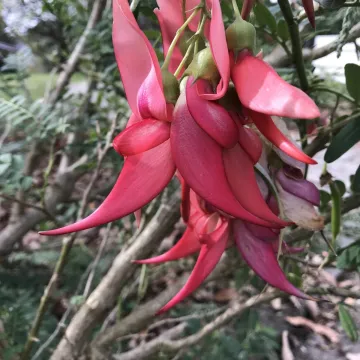
The Glory Pea, scientifically known as Clianthus puniceus, is a striking woody shrub belonging to the Fabaceae family. It is widely admired for its unique, beak-shaped, vibrant red flowers that distinguish it from other legumes, leading to its popular common names like Kaka Beak or Parrot's Beak.
Native to the North Island of New Zealand, this plant has a fascinating history within the indigenous flora. While it remains relatively rare in its natural habitat, it has been preserved and propagated globally as a prized ornamental plant, thriving particularly well in temperate to subtropical climates where it is protected from harsh weather.
Botanically, the Glory Pea features pinnate, evergreen foliage that provides a lush backdrop for its dramatic, pendulous flower clusters. The stems are semi-woody and flexible, often requiring support if grown against a wall or trellis, or they can be pruned to maintain a bushier, compact shrub habit suitable for garden beds.
Successful cultivation requires specific environmental conditions. It demands well-draining soil to prevent root rot, as the plant is highly sensitive to waterlogging. It thrives in locations that offer plenty of bright, indirect sunlight and protection from cold winds, as Clianthus puniceus is not frost-hardy and can easily suffer damage in temperatures below freezing.
The primary use of the Glory Pea is in ornamental horticulture, where it serves as a focal point for gardens or indoor conservatories. Growers must stay vigilant against pests such as aphids and spider mites, which can infest the foliage, and monitor for fungal infections caused by humidity. Proper maintenance includes regular light pruning and the application of balanced, phosphorus-rich fertilizers to encourage blooming.
- Requires excellent soil aeration and drainage.
- Needs protection from frost and intense winds.
- Benefits from periodic pruning after flowering.
- Vulnerable to sap-sucking insects like aphids.
Photo gallery