Glottiphyllum longum
Glottiphyllum longum (Haw.) N. E. Br.
Description
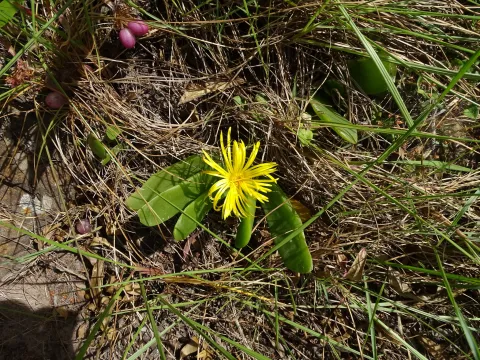
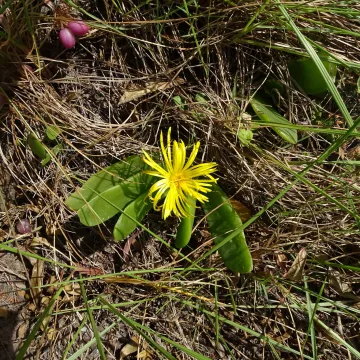
Glottiphyllum longum is a perennial succulent species belonging to the Aizoaceae family. It is recognized for its distinctive, tongue-shaped succulent leaves that are arranged in a distichous pattern, forming low-growing, clustered mats typical of many desert flora.
The plant originates from the arid regions of South Africa, specifically within the Cape provinces. Its native environment is characterized by rocky outcrops and high sun exposure, which has shaped its physiological evolution to endure long periods of drought and intense heat through internal water storage.
Botanically, the plant features smooth, elongated, and often fleshy leaves that may turn slightly reddish when exposed to strong light. The most striking feature of the species is its large, daisy-like yellow flowers that bloom predominantly during the autumn season, providing significant ornamental value to collectors.
The cultivation of this species requires a porous, well-draining substrate mix, typically composed of coarse sand and inorganic grit. Success in growing this plant depends heavily on mimicking its natural climate: high light intensity is essential to maintain a compact growth form, and the soil must be allowed to dry out completely between irrigations to prevent root rot.
Commercially and horticulturally, Glottiphyllum longum is primarily utilized in ornamental horticulture for succulent collections and xeric landscapes. The plant is susceptible to common succulent pests such as mealybugs and spider mites. Proper air circulation and controlled humidity are the primary defenses against fungal infections and physiological disorders.
- Growth habit: Low-growing, clumping
- Light requirement: Full sun
- Watering: Sparse, seasonal
- Propagation: Seeds or stem cuttings
Photo gallery