
Description
Rattlesnake mannagrass (Glyceria canadensis) is a perennial grass species belonging to the Poaceae family. It is distinct for its adaptation to wet, marshy habitats, making it a specialized crop for agricultural sites where drainage is poor and soil saturation is high throughout the growing season.
Native to North America, this plant is naturally found in swamps, bogs, and along the edges of ponds and streams. Its range spans across various temperate zones, where it serves as a critical component of wetland ecosystems and, under proper management, an auxiliary forage resource for livestock.
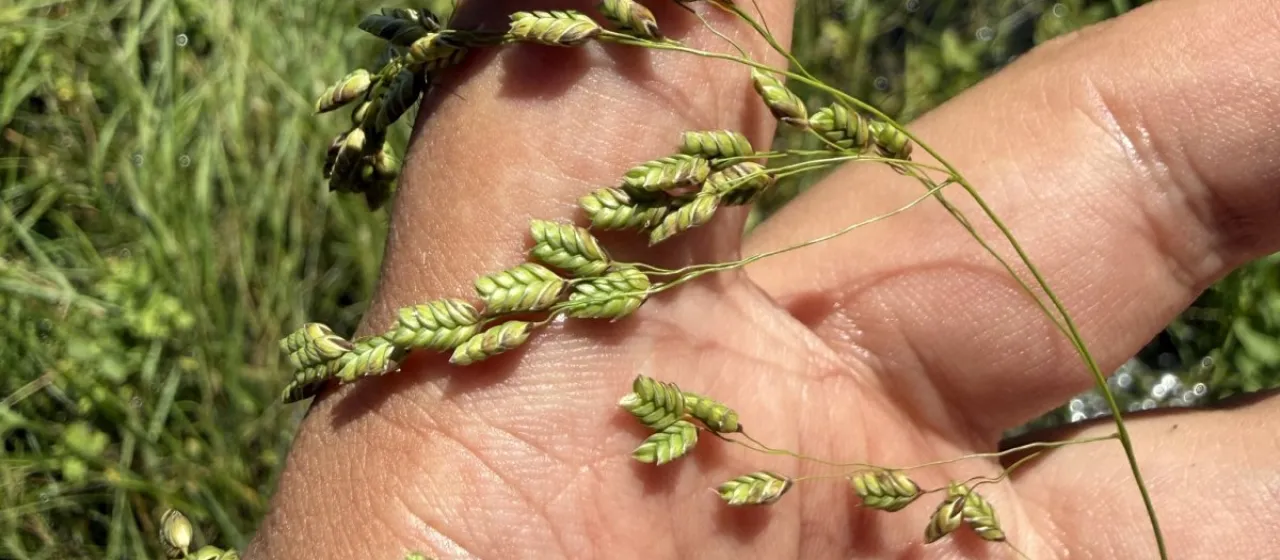
Botanically, Rattlesnake mannagrass grows in clumps, with stems reaching up to 120 cm in height. The inflorescence is a loose, nodding panicle, often described as having a rattling appearance due to the structure of its spikelets, which gives the species its common English name. It possesses flat, rough-textured leaf blades.
The agronomic requirements for this species focus primarily on hydrology. It thrives in soils that are saturated, acidic to neutral, and rich in organic matter. While it is hardy and capable of surviving harsh winters, cultivation success depends on consistent soil moisture levels, as the plant does not tolerate prolonged drought.
Economically, it is valued for land reclamation and as a component of wet-meadow forage. It provides rapid biomass accumulation when moisture is abundant. Beyond forage, it is frequently used in conservation agriculture for soil stabilization along water bodies to prevent erosion and filter agricultural runoff.
Management considerations include:
- Monitoring for rust fungi that can flourish in high-humidity microclimates.
- Managing competitive weed species that might encroach on poorly established stands.
- Timing harvests to ensure high nutritional quality before seed maturation.