
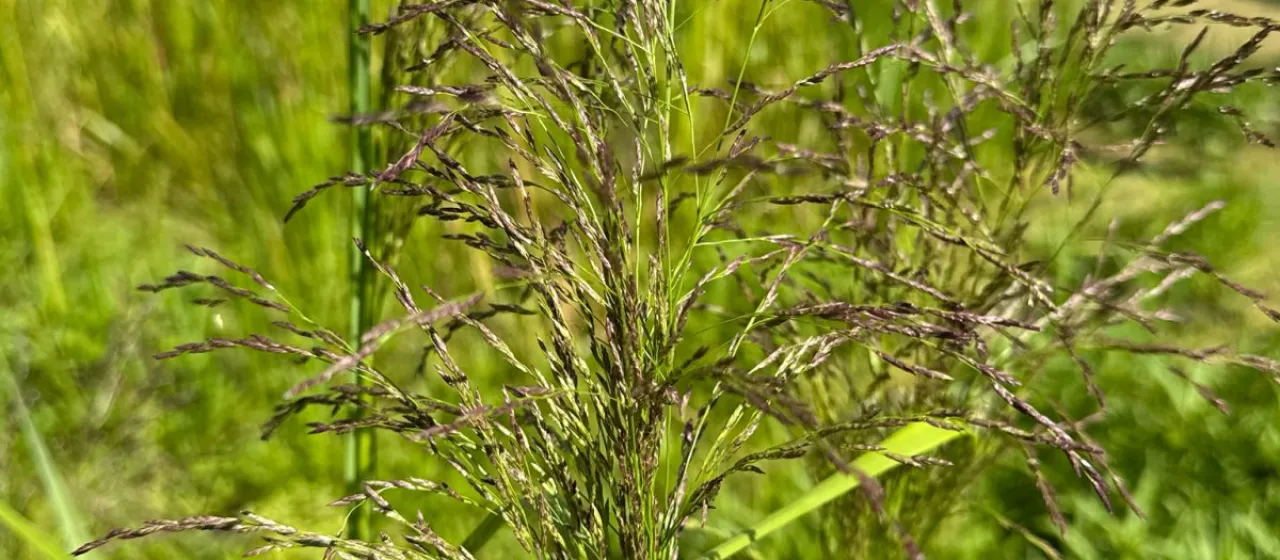
Description
American mannagrass (Glyceria grandis) is a perennial grass species belonging to the Poaceae family. Known for its high biomass production, this crop is particularly valued in agriculture for its ability to thrive in waterlogged or flooded soils where conventional forage crops often fail to establish.
Native to North America, the species naturally inhabits riparian zones, marshes, and damp meadows. Its natural distribution demonstrates an evolutionary adaptation to anaerobic soil conditions. In agricultural contexts, it is increasingly recognized for its potential to restore marginal, saturated lands and convert them into productive forage areas.
Botanically, Glyceria grandis features robust, erect culms that can reach heights of up to 2 meters. The leaves are broad and exhibit a distinct bluish-green hue. It produces large, spreading panicles that turn a characteristic brownish or purplish color upon maturation. The plant possesses a rhizomatous root system, which provides excellent winter hardiness and facilitates rapid vegetative regrowth after harvesting.
Cultivation requirements focus on nutrient-rich, moist soils. The crop is exceptionally tolerant to standing water and seasonal flooding. Agronomic management involves site selection in low-lying areas, proper seedbed preparation to minimize weed competition during the establishment phase, and moderate nitrogen fertilization to maximize foliage yield during the peak growing season.
The agricultural and environmental applications for American mannagrass are diverse:
- Production of high-quality hay for ruminant livestock.
- Utilization as a sustainable forage crop in wet pasture systems.
- Stabilization of stream banks and drainage ditch perimeters to prevent erosion.
- Phytoremediation and natural filtration in constructed wetlands.
Common plant health issues include cereal rusts and ergot, which are more prevalent in high-humidity microclimates. Insect pests such as cereal aphids and various grass-feeding larvae can affect stand health. Maintaining optimal stand density and adhering to a strict mowing schedule helps mitigate disease pressure and ensures the long-term sustainability of the pasture.