
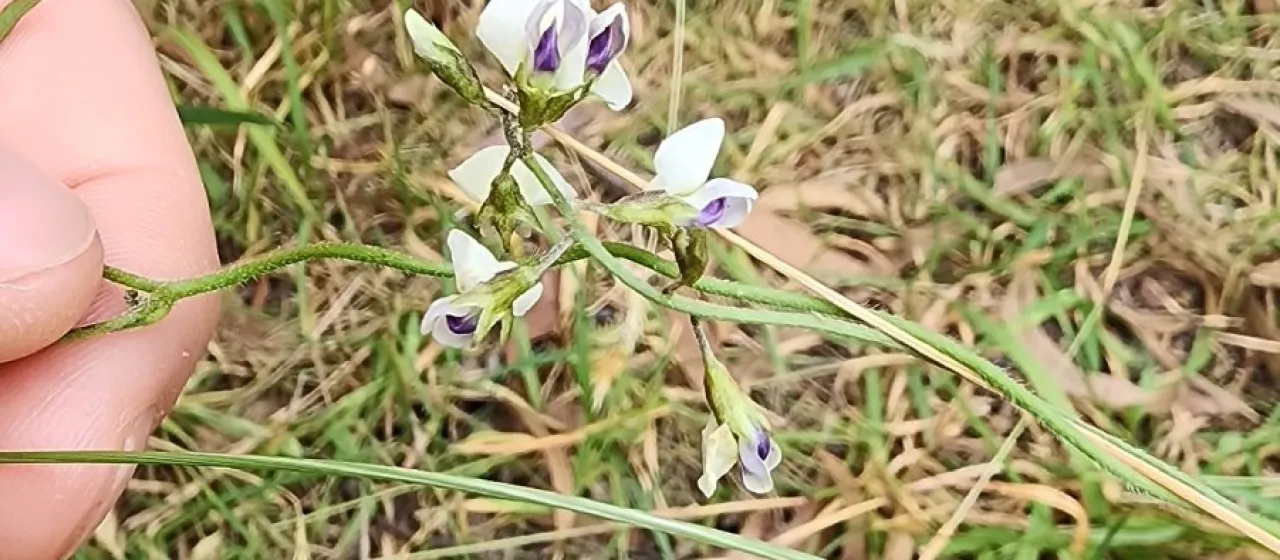
Description
Twining Glycine (Glycine clandestina) is a perennial herbaceous plant belonging to the Fabaceae family. As a wild relative of the commercial soybean, this species is highly valued in plant science for its genetic diversity and inherent resistance to various environmental stresses.
Native to Australia, this plant occupies a wide range of habitats, from coastal forests to arid woodlands. Its broad geographic distribution underscores its adaptability to diverse environmental conditions, making it a subject of interest for researchers looking to improve crop resilience in changing climates.
Botanically, Glycine clandestina is characterized by slender, twining or prostrate stems and trifoliate leaves. A key biological trait is its cleistogamy, where the plant produces self-pollinating flowers that often remain closed and may even be subterranean, ensuring reproductive success in unpredictable environments.
Regarding cultivation, the species thrives in well-drained soils and demonstrates remarkable tolerance to low-nutrient substrates. It is well-adapted to environments with intermittent rainfall, exhibiting a strong capability to maintain growth during mild drought periods due to its efficient root system.
The primary agricultural application of Twining Glycine is as a genetic resource for soybean breeding programs. Its ability to tolerate biotic and abiotic stressors provides a foundation for enhancing modern cultivars. Furthermore, its potential as a ground-cover species in pasture management is an area of ongoing agronomic exploration.
Common pests and diseases affecting the plant include:
- Root rot fungi triggered by poorly drained soils.
- Aphids that feed on succulent leaf tissues.
- Powdery mildew under high humidity conditions.
- Various coleopteran pests that consume young foliage and seed pods.