
Description
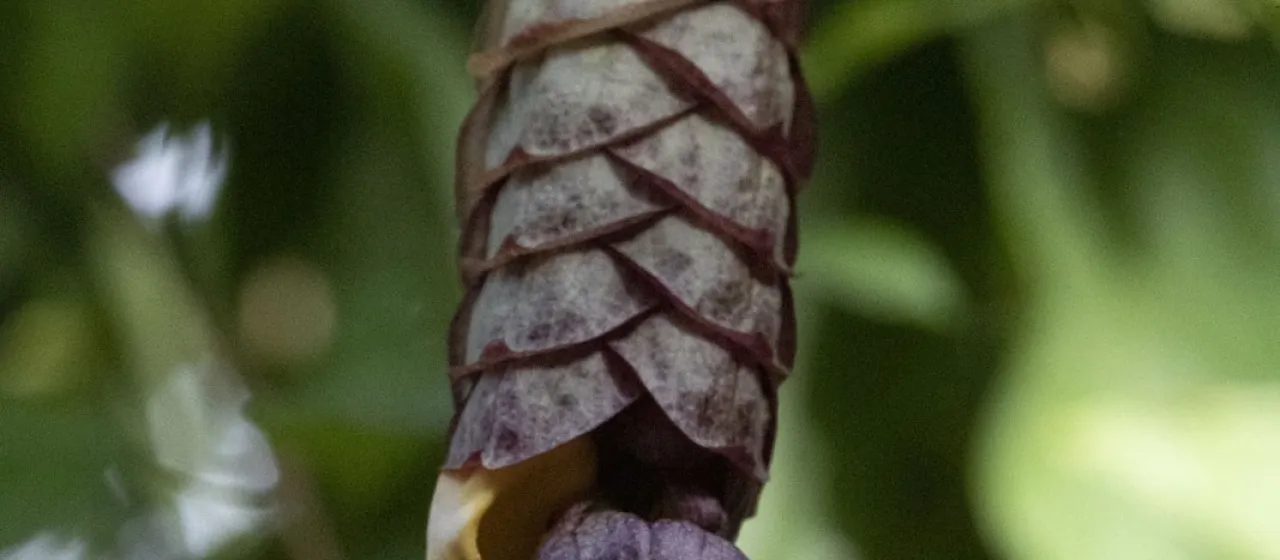
Gmelina philippensis, commonly referred to as the Parrot's Beak or Philippine Gmelina, is a perennial woody shrub belonging to the Lamiaceae family. This plant is renowned for its striking, waxy, yellow, helmet-shaped bracts that protect the delicate tubular flowers inside, creating an appearance often compared to a cobra or a bird's beak.
Native to the Philippines and regions throughout Southeast Asia, this plant flourishes in tropical climates characterized by high humidity and consistent warmth. It is widely distributed across tropical zones where it is appreciated for its ability to provide a dramatic architectural element in gardens and landscaped areas. It generally thrives in monsoon-influenced ecosystems.
The botanical structure of the plant consists of arching, flexible stems and broad, ovate leaves that maintain a deep green color. Its growth habit can be semi-vining, which makes it suitable for training against trellises or supports. The flowers typically appear in drooping clusters, providing a brilliant yellow contrast to the dense foliage.
Cultivation requirements involve high light intensity to ensure maximum flowering and a well-drained, nutrient-rich soil medium. While it prefers consistent moisture, it is sensitive to waterlogging. Regular pruning is essential to manage its vigorous growth, promote bushier development, and maintain an aesthetically pleasing shape throughout the growing season.
The primary economic use of this plant is ornamental, serving as a focal point in tropical and subtropical landscaping. Regarding plant health, it is occasionally susceptible to pests like aphids or spider mites, and in poorly aerated soils, it may suffer from root rot. Proper maintenance practices, such as adequate spacing and regular observation, help to mitigate these common risks.