
Goeppertia roseopicta
Goeppertia roseopicta (Linden) Borchs. & S. Suárez
Description
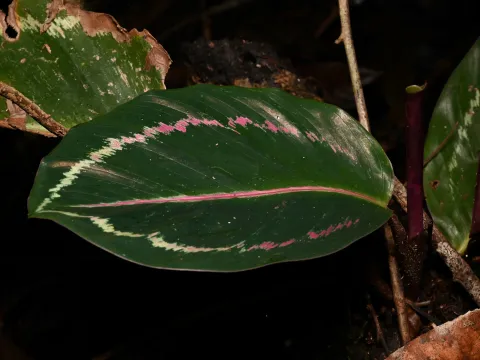
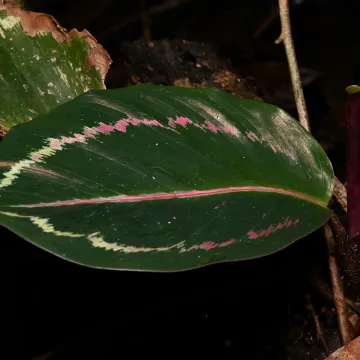
Goeppertia roseopicta, formerly classified within the genus Calathea, is a stunning ornamental perennial belonging to the Marantaceae family. It is widely recognized for its broad, elliptical leaves that feature intricate, artistic patterns in shades of rose, cream, and deep green, making it a highly prized specimen in the indoor plant industry.
The species is native to the tropical rainforests of Brazil, where it thrives in the understory layer. This environment provides the plant with filtered sunlight, consistent tropical warmth, and naturally high humidity levels, which are essential factors to replicate when cultivating this crop in non-tropical settings.
Botanically, the plant is characterized by its compact, clumping growth habit and its fascinating nyctinasty—a movement where leaves fold upward during the night. This adaptation is controlled by the pulvinus, a swollen joint at the base of the leaf stalk, which allows the plant to respond to circadian rhythms and light changes.
Agronomic requirements for successful cultivation include a well-draining, loose, acidic substrate that retains moisture without becoming waterlogged. Ideal temperatures range from 20°C to 25°C. It is critical to avoid cold drafts and direct exposure to intense sunlight, both of which can lead to significant physiological stress and foliage damage.
The primary economic use of Goeppertia roseopicta is in the horticultural sector as a high-value ornamental plant. Producers must carefully manage potential threats to ensure high-quality yields:
- Spider mites that flourish in dry air conditions.
- Mealybugs and aphids affecting the undersides of leaves.
- Root rot resulting from poor soil drainage or overwatering.
- Fungal leaf spots caused by low air circulation and high humidity.
Photo gallery