
Description
Gomphrena canescens is an herbaceous flowering plant belonging to the Amaranthaceae family. It is highly regarded in horticulture as a valuable everlasting flower, known for its ability to retain its vibrant color and structural integrity long after it has been harvested and dried, making it a staple in the dried flower industry.
The species originates from Australia, primarily inhabiting arid and sunny environments. This evolutionary history has endowed the plant with significant drought tolerance and a preference for high-intensity sunlight. Today, it is cultivated worldwide, finding its place in decorative gardens and as a commercial crop for florists who specialize in dried flower arrangements.
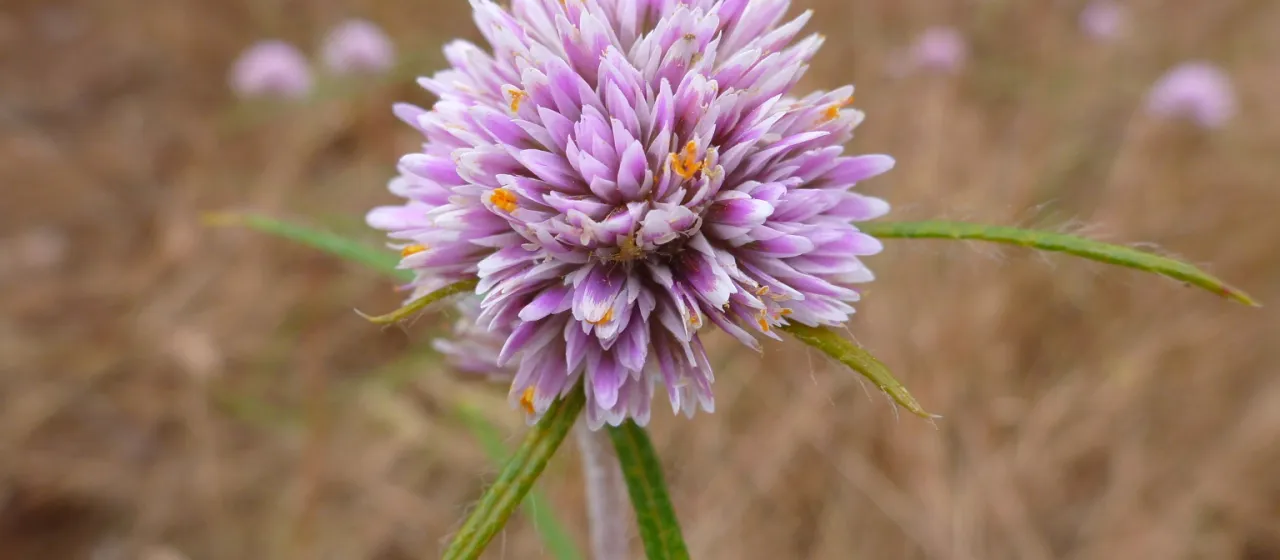
Botanically, the plant is characterized by its branched, pubescent stems, which give it a grayish or "canescent" appearance, hence the specific epithet. The leaves are typically lanceolate and arranged in an opposite fashion along the stems. The inflorescences are dense, clover-like heads, appearing in shades of white, pink, or purple, supported by bracts that give the flowers their papery texture.
Agricultural requirements for successful cultivation include well-draining, sandy-loam soils with a neutral pH. The plant thrives in full sun and requires protection from excessive soil moisture, which can trigger root rot. Growers should focus on balanced fertilization during the vegetative stage to promote robust stem growth and a higher number of bloom cycles.
- Sowing time: Early spring for indoor seed starting.
- Temperature range: 20–25°C for germination.
- Soil preparation: High drainage and moderate organic matter.
- Watering: Deep but infrequent to encourage deep root systems.
- Harvesting: Cut when the flowers are fully developed.
Commercially, the plant is used for fresh-cut arrangements and as a dried botanical product. In terms of plant health, Gomphrena canescens is generally resilient. However, producers must monitor for aphids and spider mites, which can become problematic in sheltered greenhouse conditions. Proper sanitation and crop rotation are essential to prevent the accumulation of soil-borne pathogens.