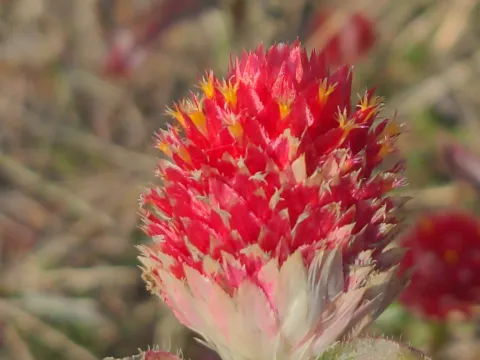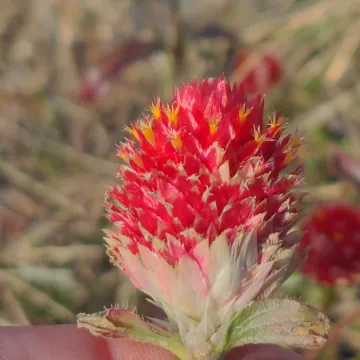
Gomphrena haageana
Gomphrena haageana Klotzsch
Description
Gomphrena haageana (Klotzsch) is an attractive annual ornamental plant that belongs to the Amaranthaceae family. Distinct from the more common Globe Amaranth, this species is highly valued for its striking, flame-colored, elongated flower heads and its elegant, branching habit, which brings a unique texture to any garden landscape.
Originating from the arid regions of Mexico and parts of Central America, this plant is naturally adapted to high temperatures and intense sunlight. Its native environment dictates its preferences, as it flourishes in warm, dry climates where it can receive the full sun it requires to develop its vibrant coloration and robust structure.
Botanically, Gomphrena haageana is characterized by lanceolate, slightly pubescent leaves and tall, slender stems that carry dense, cone-shaped inflorescences. The "flowers" are composed of stiff, papery bracts that resist fading, making them exceptionally durable both in the garden and when harvested for dried floral arrangements.
The agronomic requirements for this crop focus on providing well-drained, light soil and maximum exposure to sunlight. It is particularly sensitive to waterlogged conditions, which can be detrimental to root health. Therefore, planting in sandy or slightly loamy soil with moderate fertility and minimal irrigation is recommended to ensure healthy plant development throughout the growing season.
Economically and horticulturally, Gomphrena haageana is primarily used in landscaping for bedding, borders, and as a component in container gardening. It is widely recognized as a premier everlasting flower or dry flower, as the inflorescences maintain their bright orange and red hues long after the harvesting process, making them a favorite for professional florists and hobbyists.
- Seeds should be sown indoors before the last frost to ensure a long flowering season.
- The plant thrives in low to moderate nitrogen levels to prevent excessive vegetative growth.
- Regular deadheading is not strictly required but can promote continuous blooming.
- Watch for spider mites, which can occur during periods of extreme heat and dryness.
- Proper airflow is critical to prevent powdery mildew in humid, late-season conditions.
Photo gallery