
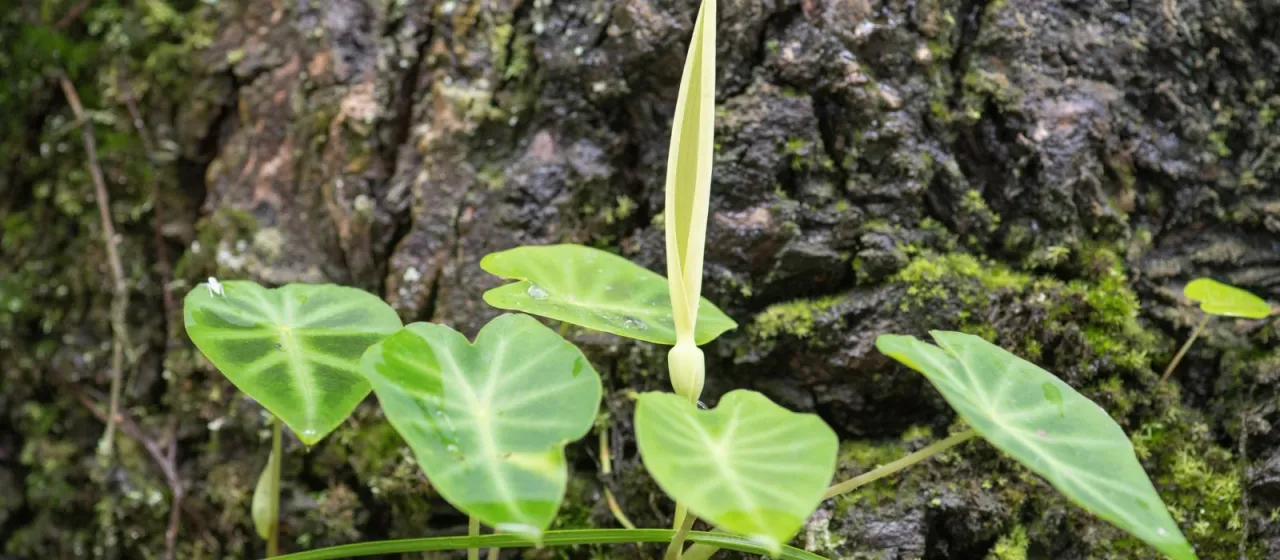
Description
Gonatanthus pumilus is a perennial herbaceous plant belonging to the Araceae family. Recognized for its ornamental value and peculiar growth habit, this species is a subject of interest in both tropical horticulture and specialized botanical studies due to its unique survival strategies in its natural environment.
The origin of this culture traces back to the mountainous regions of Asia, specifically the Himalayan foothills, Northern India, and parts of China. It thrives in humid forest habitats, often found growing on shaded rocky slopes or near water sources, which dictates its preference for consistently moist environments and stable temperatures.
From a botanical perspective, the plant features a tuberous rootstock and prominent heart-shaped leaves. One of its most distinctive biological features is the production of bulbils (small vegetative buds) on the inflorescence stalks, which serve as a primary means of asexual reproduction, allowing the plant to colonize suitable micro-habitats efficiently.
Regarding agrotechnical requirements, the plant demands a well-draining, nutrient-rich soil medium with a slightly acidic pH. Consistent soil moisture is essential, alongside high relative humidity. It is shade-tolerant and requires protection from direct, harsh sunlight, which can quickly dehydrate the foliage and cause severe cellular damage.
In terms of agricultural and horticultural use, it is grown primarily as an exotic decorative plant in greenhouses or interiors. Like many other aroids, it is susceptible to specific biological pressures. Key management considerations include:
- Prevention of fungal root rot through proper drainage and watering techniques.
- Control of spider mites that thrive in low-humidity indoor environments.
- Monitoring for mealybug infestations on leaf axils and stems.
- Maintenance of thermal conditions above 15 degrees Celsius to prevent dormancy or plant stress.