
Description
Partridge breast aloe (Gonialoe variegata) is a distinctive succulent belonging to the Asphodelaceae family. Widely recognized for its unique leaf patterns, this plant is a popular choice among indoor gardeners and specialized collectors who value low-maintenance yet visually striking botanical specimens.
Originating from the arid regions of Southern Africa, particularly South Africa and Namibia, this species has evolved to thrive in harsh, rocky environments. Its natural habitat is characterized by erratic rainfall and nutrient-poor soils, which has resulted in the plant's highly efficient water-retention mechanisms and deep-seated evolutionary hardiness.
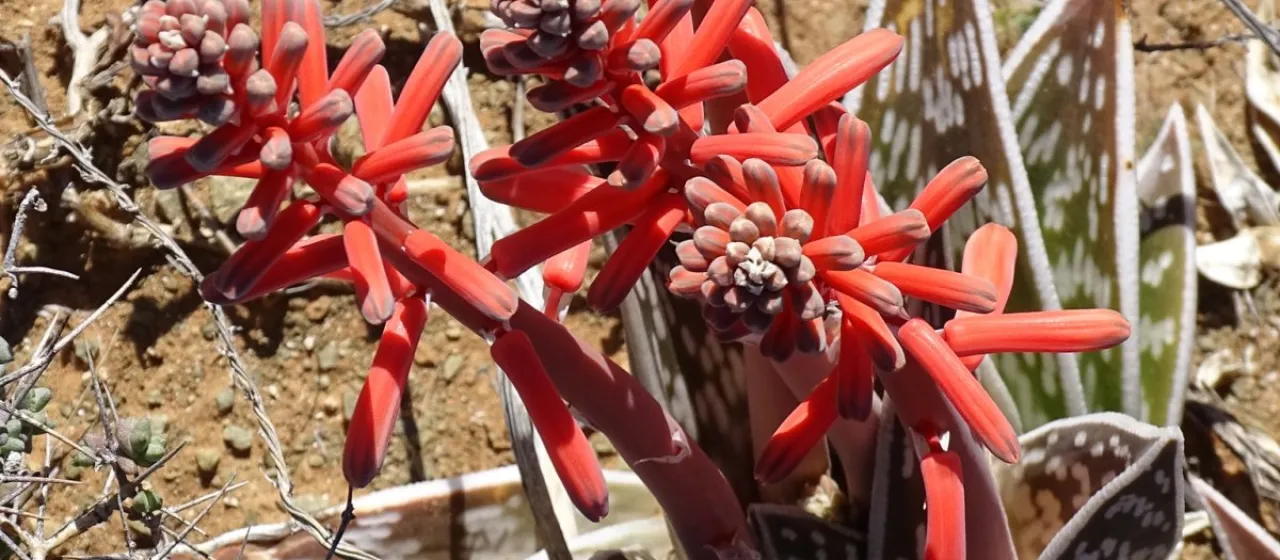
Botanically, Gonialoe variegata is defined by its compact, stemless rosette shape, where leaves are arranged in a strict, spiraling three-ranked pattern. The foliage features mottled white bands or spots, which provide natural camouflage in its native landscape. The plant produces long racemes of bell-shaped, salmon-pink to orange flowers during the spring season.
Agricultural and horticultural requirements emphasize the importance of high light intensity combined with precise irrigation management. A gritty, mineral-based potting mix is essential to prevent waterlogging, as the root system is sensitive to prolonged moisture. During the winter, the plant requires a period of dormancy with significantly reduced watering to trigger healthy vegetative growth the following spring.
Typical plant health issues often stem from poor drainage, leading to fungal pathogens such as root rot. Insect pests include common succulent threats such as mealybugs, aphids, and scale insects, which can be managed through mechanical removal or targeted application of systemic pesticides. Regular monitoring of leaf turgor and crown cleanliness is recommended for optimal plant maintenance.