
Description
Goniothalamus cardiopetalus is an evergreen woody species belonging to the Annonaceae family. This genus is widely known in tropical botany for containing bioactive compounds, making it a subject of interest for both pharmacological research and conservation of rare botanical specimens.
The plant is native to the tropical regions of India, specifically thriving in the humid forest environments of the Western Ghats. Its distribution is closely linked to ecosystems that maintain high moisture levels throughout the year, which serves as a critical factor for successful cultivation.
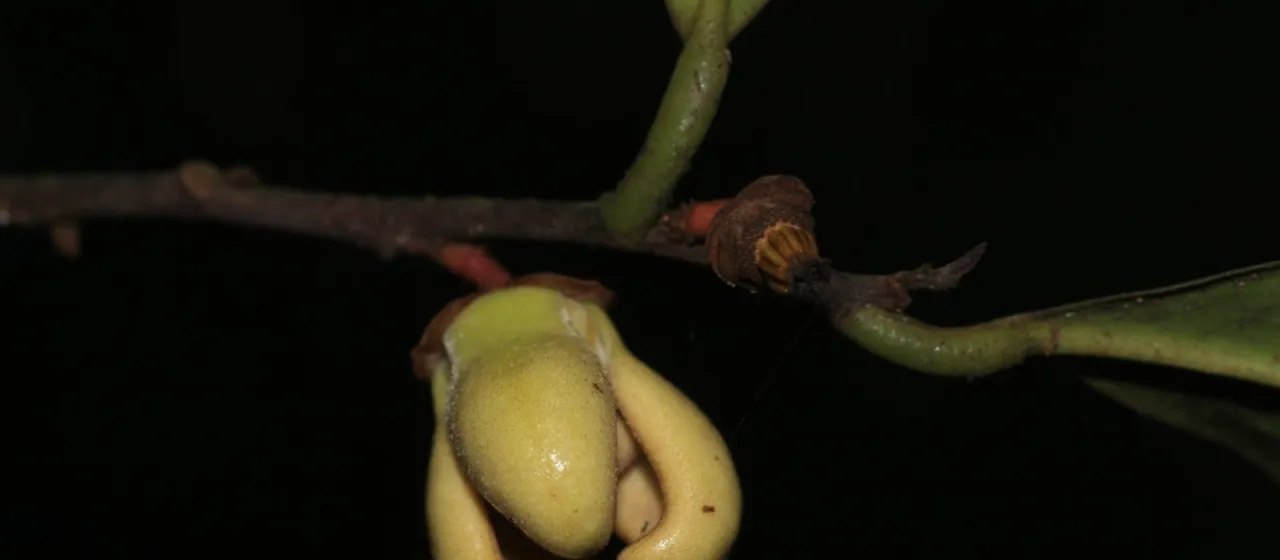
Botanically, this species is distinguished by its leathery, lanceolate leaves and uniquely shaped heart-like petals, which define its taxonomic identity. The plant produces multiple aggregate fruits containing seeds that require specific environmental cues for germination, reflecting the complex biological cycles of tropical Annonaceae.
Agricultural requirements focus on well-drained, nutrient-rich, and slightly acidic soils. It is essential to maintain high relative humidity and protect the plant from direct, scorching sunlight, especially during its early growth stages. Proper air circulation is also necessary to prevent foliage issues in closed environments.
Regarding its economic utility, the species is predominantly recognized for its phytochemical potential, as extracts from its bark and leaves are studied for their antimicrobial and cytotoxic properties. Common pests in greenhouse conditions include spider mites and aphids, while root rot remains the primary threat if soil drainage is inadequate.
- Family: Annonaceae
- Native Habitat: Tropical India
- Propagation: Seeds/Cuttings
- Key Feature: Heart-shaped petals