
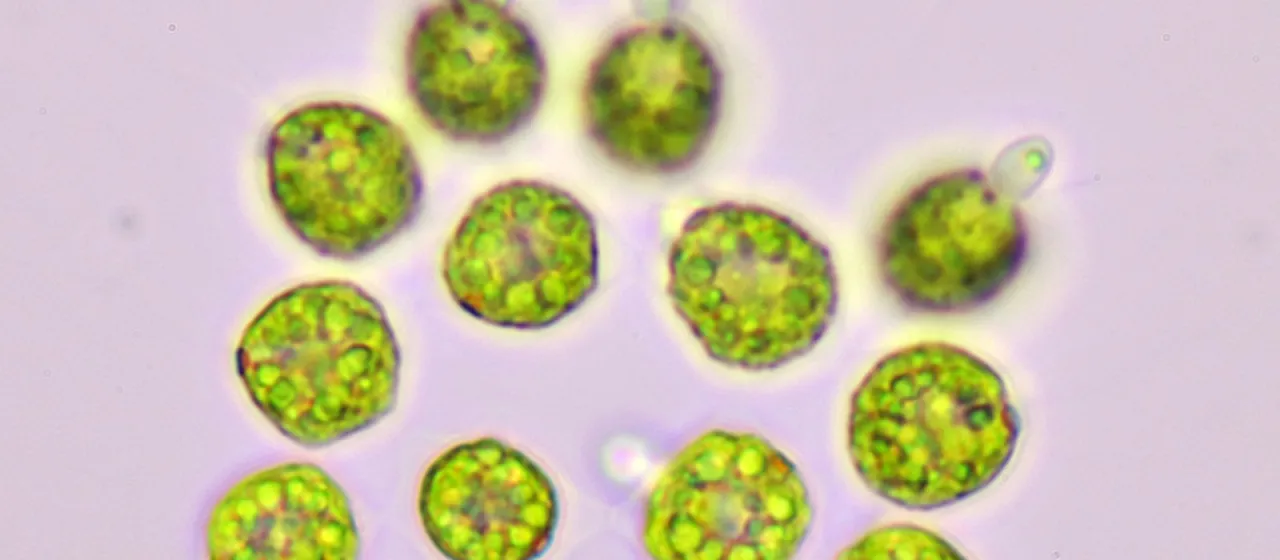
Description
Gonium pectorale is a microscopic colonial green alga belonging to the family Volvocaceae. It is primarily known for its flat, plate-like colonies, typically comprised of 8 to 32 cells embedded in a gelatinous matrix. This organism serves as a pivotal model in evolutionary biology for understanding the transition from unicellular to multicellular life forms.
The organism is found worldwide in various freshwater environments, including ponds, temporary pools, and ditches. It thrives in stagnant or slow-moving water bodies rich in organic matter. While it is not a conventional crop in open-field agriculture, it is increasingly being cultivated in bioreactors to study algal development and biomass production.
The botanical structure of Gonium pectorale is defined by biflagellated cells that maintain a high degree of coordination. This coordination is essential for the collective movement and phototactic responses of the colony. Its reproductive cycle involves the formation of daughter colonies within the parent cell mass, which are eventually released into the surrounding medium.
Successful cultivation requires specific environmental conditions, including moderate to high light intensity, an optimal temperature range of 18–24°C, and a nutrient-rich aqueous solution. Maintaining the correct balance of nitrates, phosphates, and essential trace elements is crucial for sustained growth. Since it is a strictly aquatic organism, soil is not used, but water quality management is the primary focus of its agrotechnology.
The agricultural and biotechnological value of this species is expanding. Ongoing research explores its ability to produce specific lipids and pigments that could be useful in food and pharmaceutical industries. However, the culture is sensitive to environmental stressors and contamination by predators such as rotifers or smaller protozoa, which require strictly controlled bioreactor conditions to mitigate.