
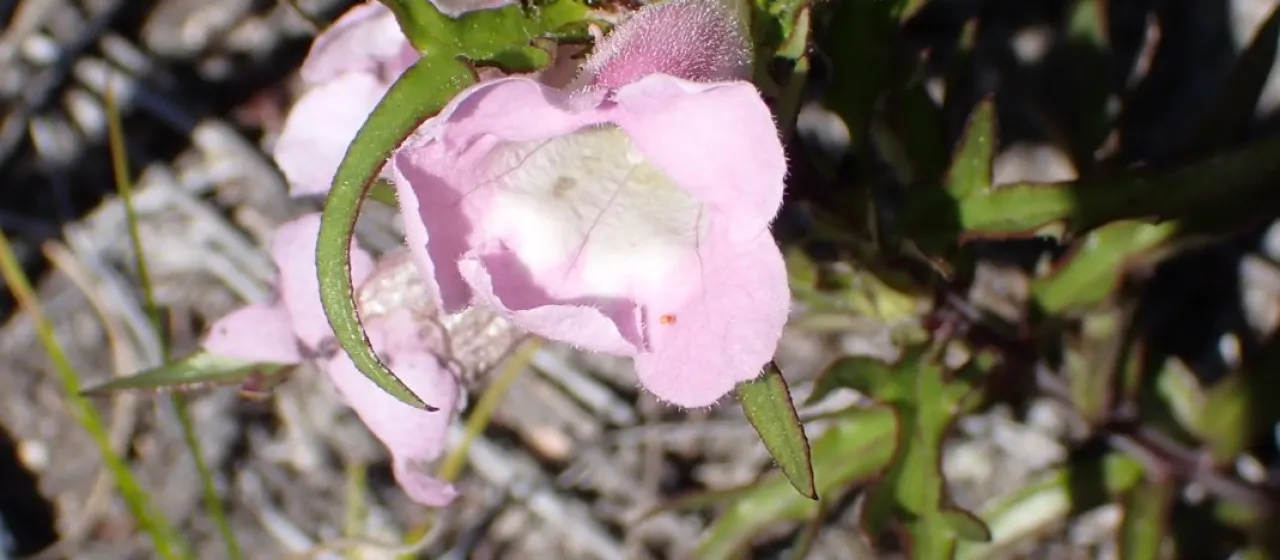
Description
Graderia scabra is a perennial herbaceous plant belonging to the family Orobanchaceae. Unlike fully parasitic members of this family, it is a hemiparasite, meaning it can perform photosynthesis while simultaneously tapping into the root systems of host plants to acquire essential water and mineral nutrients via specialized organs known as haustoria.
The species originates from Southern and Eastern Africa, where it inhabits grasslands, savannas, and various open ecosystems. Its geographic distribution is strictly tied to the presence of compatible host plants, which provide the necessary biological infrastructure for the species to thrive in varying environmental conditions.
Botanically, Graderia scabra is characterized by its rough, pubescent stems that give the plant its specific texture. The foliage consists of opposite, lanceolate to linear leaves. The flowers are typically striking in appearance, displaying shades of pink to purple, organized in loose inflorescences that bloom during the favorable growing seasons of their native habitats.
Agricultural requirements for this species are complex due to its parasitic nature. It prefers well-drained, sandy or loamy soils and requires a stable moisture regime. Successful cultivation involves maintaining a balance between the host plant's health and the parasite's growth, which requires precise management of soil nutrients and spacing to ensure both plants survive and develop properly.
The practical application of Graderia scabra is currently focused on ornamental horticulture and botanical study. While it is not a large-scale agricultural crop, its resilience to poor soil conditions and unique aesthetic value make it an interesting subject for niche landscaping and conservation research. Future use may depend on further phytochemical analysis of its potential medicinal properties.
- Hemiparasitic biological mechanism.
- High aesthetic value in garden settings.
- Dependence on host plant proximity.
- Resilience in nutrient-poor ecosystems.