
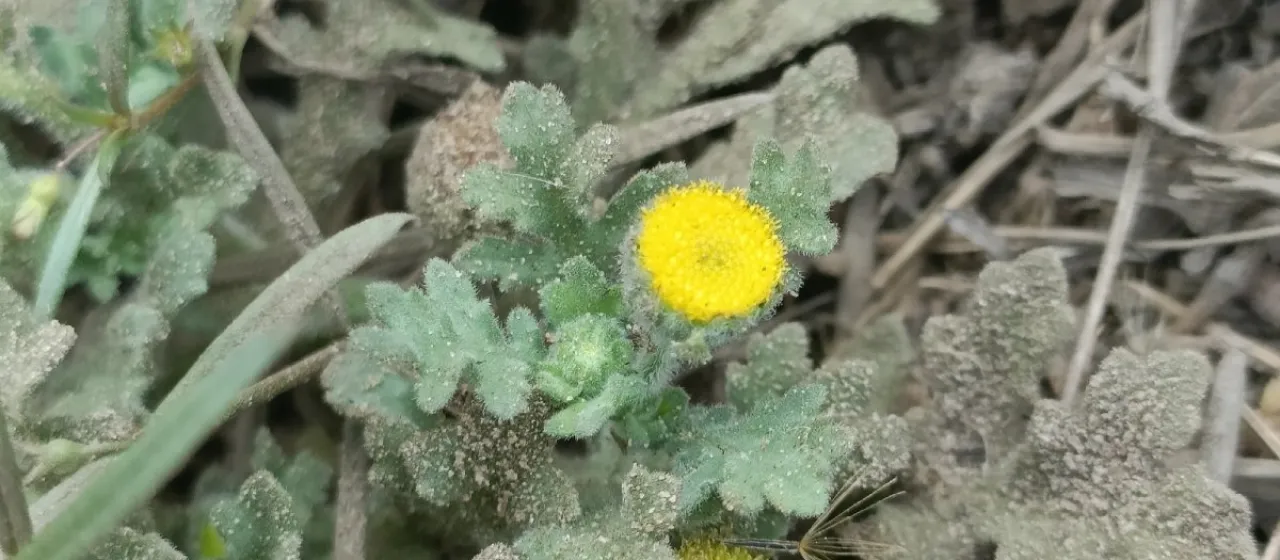
Description
Grangea maderaspatana is a herbaceous plant belonging to the Asteraceae family. It is widely recognized in its native regions for its specific ecological niche and its long-standing history of being used in various local systems of medicine, making it a plant of significant interest for botanical studies.
Originating from the tropical regions of Asia and Africa, the plant is typically found in India, Sri Lanka, and throughout Southeast Asia. It thrives in humid environments such as riverbanks, moist fields, and wet grasslands. Because of its preference for moisture, it is often found as an associated species in rice paddies, sometimes acting as an invasive plant that requires management.
The botanical structure of the plant consists of a branching, often prostrate stem with pubescent, pinnately-lobed leaves. The flower heads are distinctively yellow and small, growing in compact clusters. This structural adaptation allows the plant to cover the soil surface effectively, which helps in preventing erosion in its native habitat while ensuring efficient seed dispersal.
Growing conditions for Grangea maderaspatana are strict regarding moisture and temperature. It requires fertile, water-retaining soils with a balanced pH level. In an agricultural setting, the plant demands consistent irrigation to maintain high biomass production, as it is highly sensitive to water stress and cannot survive in frost-prone or arid climates.
The хозяйственное utility of this species is largely medicinal. Key areas of application include:
- Production of herbal extracts for therapeutic use.
- Use in treating inflammation and respiratory conditions in traditional medicine.
- Exploration of its antioxidant potential in modern pharmacological research.
The crop is prone to several diseases if managed improperly, particularly fungal infections such as powdery mildew, which thrive in high humidity conditions. Common pests include aphids and soil-borne nematodes, which can significantly damage the root system if adequate crop rotation practices are not implemented.