
Description
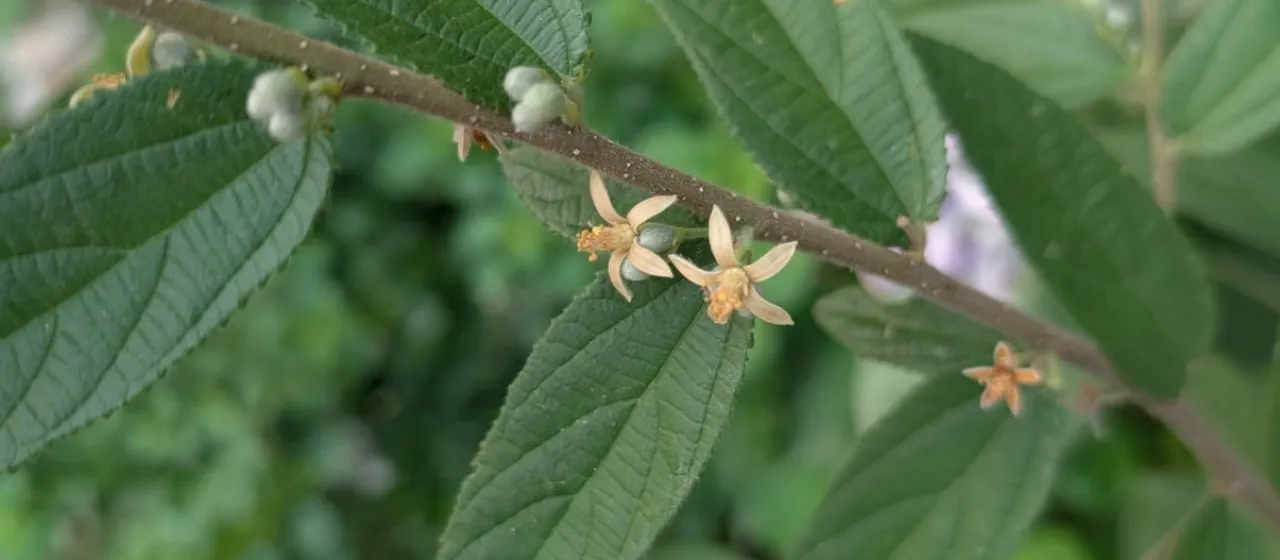
Grewia hirsuta is a perennial shrub belonging to the Malvaceae family. The plant is characterized by its stems and leaves covered with dense, stiff hairs, which gives it a distinct texture. As a member of a widely distributed tropical family, it exhibits strong survival mechanisms that make it a resilient species in diverse environments.
The plant originates from the tropical and subtropical zones of South and Southeast Asia. Its distribution range extends across countries such as India, Nepal, and parts of Myanmar. It is typically found in open forests, grasslands, and disturbed areas, proving to be an aggressive colonizer that thrives in high-temperature environments with distinct seasonal rainfall patterns.
Botanically, Grewia hirsuta is a deciduous shrub that can reach heights of up to two meters. Its leaves are simple and serrated, while its flowers, which are usually small and white or yellow, emerge during the monsoon season. The fruit is a drupe, which is often consumed by local wildlife and has historically been utilized by indigenous communities for various nutritional and health-related purposes.
For successful cultivation, the species requires well-drained soil and consistent exposure to direct sunlight. While it is highly drought-tolerant once established, young plants require regular irrigation to ensure proper root development. Maintenance practices involve annual pruning to encourage new growth and manage the plant's spread, as it can otherwise become quite dense and difficult to navigate.
In terms of economic use, the plant is valued for its medicinal properties, often utilized in traditional systems of medicine to treat inflammatory conditions and digestive issues. Beyond its pharmacological potential, the shrub plays a critical role in soil stabilization due to its extensive root structure, making it an excellent candidate for ecological restoration and agroforestry projects in tropical climates.
- Excellent tolerance to harsh, nutrient-poor soils.
- Significant potential in traditional herbal medicine.
- Natural resistance to common tropical shrub pathogens.
- Effective in preventing soil erosion in arid landscapes.