
Description
Grewia monticola, commonly known as the silver raisin, is a resilient shrub or small tree belonging to the Malvaceae family. Naturally occurring in the woodlands and savannas of Southern Africa, it is recognized for its ability to thrive in diverse and often harsh environmental conditions.
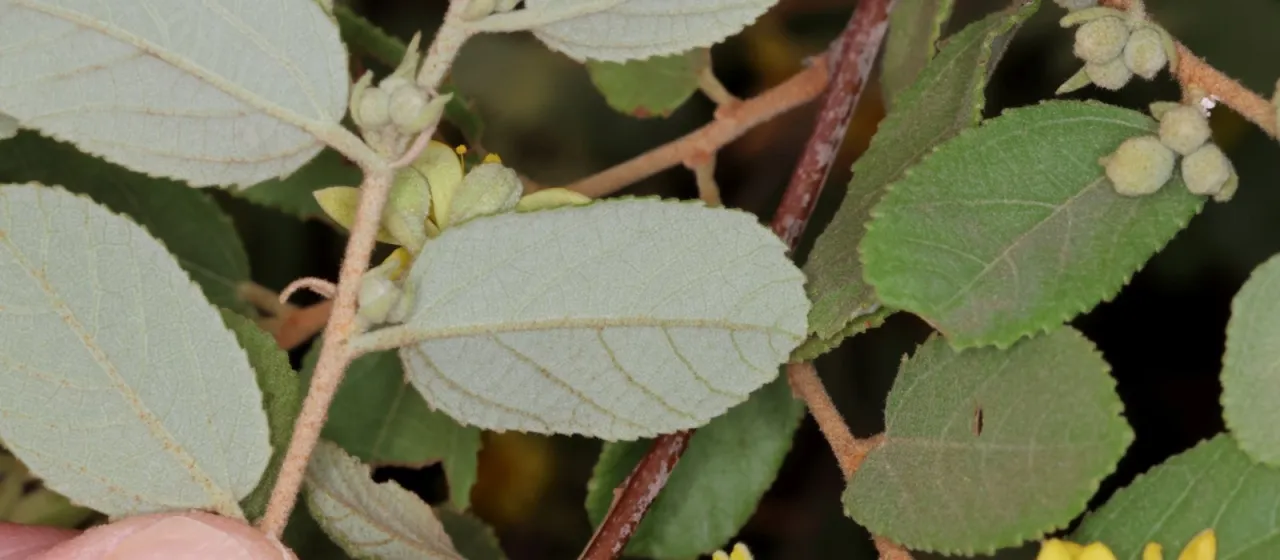
Botanically, the plant features distinctive leaves with a silvery-grey underside, providing its common name. The flowers are generally yellow, blooming during the warmer months, followed by the development of fruit clusters. These fruits, which turn dark when fully ripe, are an important source of nutrition for both local wildlife and human populations.
Regarding climate and soil requirements, Grewia monticola is highly adapted to semi-arid regions. It prefers well-drained, sandy or loamy soils and exhibits excellent tolerance to prolonged dry spells. While it is hardy once established, early-stage management involves basic weed control and protection from heavy browsing by herbivores.
The agricultural and economic utility of this species is significant. Beyond its fruit, the wood of Grewia monticola is prized for its strength and flexibility, making it an excellent material for handles and various utilitarian wooden tools. Furthermore, it plays a vital role in restoring degraded lands due to its deep root system.
In terms of plant health, it is generally considered a robust species with few major pest concerns. However, in dense stands, leaf spots or certain sap-sucking insects may occur during seasons of excessive rainfall. Proper pruning and spacing are recommended to maintain good airflow and minimize the risk of such issues within cultivated plots.
- Excellent tolerance to drought.
- Valuable wood for traditional craftsmanship.
- Nutrient-rich fruit production.
- Environmental benefit in erosion control.