
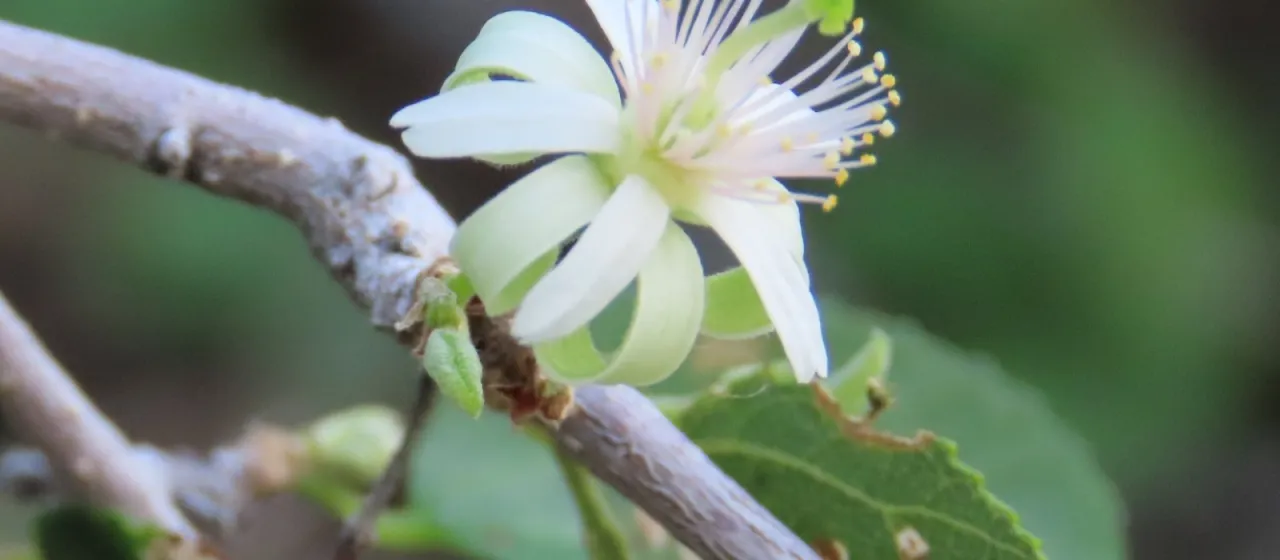
Description
Grewia tenax is a perennial shrub belonging to the Malvaceae family, recognized for its remarkable tolerance to harsh, arid climates. In modern agronomy, it is considered a vital species for reforestation and food security in drylands, providing fruit and ecological stability where traditional crops often fail.
The plant originates from the arid regions of Africa, the Arabian Peninsula, and parts of Asia. It has adapted to survive in environments with high temperatures and erratic rainfall, often thriving in rocky or sandy substrates. Its natural resilience has made it a subject of interest for sustainable agricultural development in desert-margin regions.
Botanically, Grewia tenax exhibits a compact, bushy habit, typically growing to a moderate height. The foliage consists of small, durable leaves often covered in fine hairs to mitigate transpiration. Its fruit is a small, edible drupe with a sweet flavor profile, which serves as both a nutritional source for local populations and an important food source for wildlife.
Agricultural requirements focus on full solar exposure and well-drained soil conditions. The plant is exceptionally drought-resistant once established, requiring minimal irrigation. However, strategic pruning is recommended to maintain shape and maximize fruiting potential, and soil testing is advised to ensure proper pH levels for optimal nutrient absorption.
The primary economic uses of Grewia tenax include fresh fruit consumption, production of traditional beverages, and its role in soil erosion control. Regarding plant health, cultivators should be alert to potential infestations by pests common to arid-zone shrubs and root rot caused by poor soil drainage, necessitating careful site selection and management practices.
In conclusion, this species represents a sustainable choice for diversifying crop production in challenging environments. By leveraging its inherent biological strengths and implementing appropriate maintenance techniques, farmers can successfully integrate Grewia tenax into their agricultural systems, yielding significant benefits for food production and land conservation.