
Description
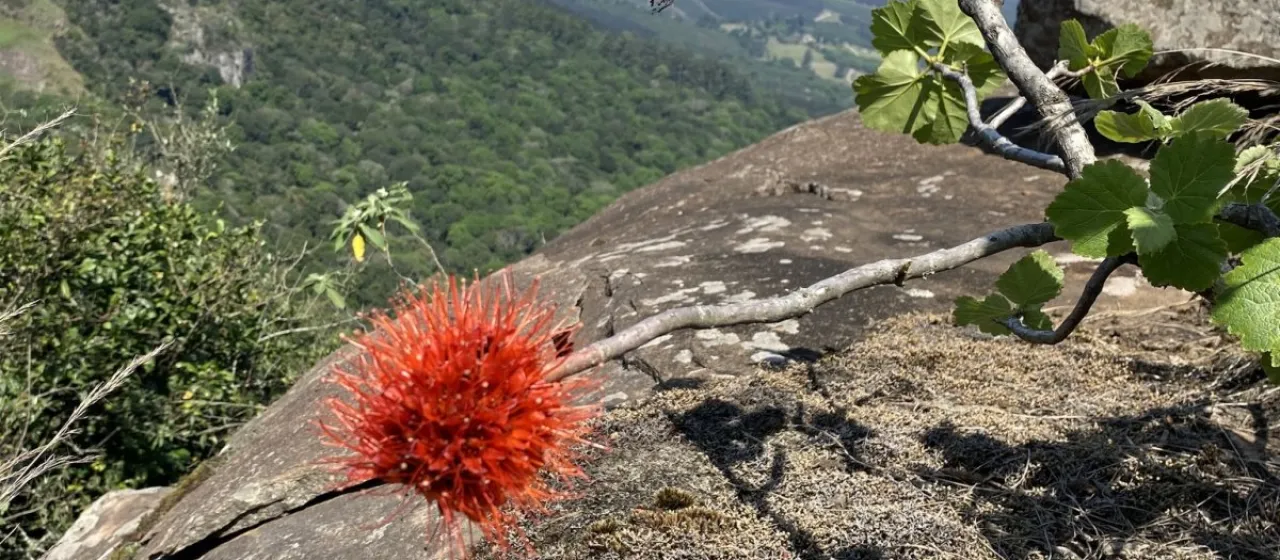
The Natal bottlebrush (Greyia sutherlandii) is a striking deciduous shrub or small tree native to South Africa, belonging to the family Francoaceae. It is widely recognized for its vibrant, crimson-colored inflorescences that bloom at the ends of its branches, providing a dramatic visual contrast against the green foliage.
Originating from the eastern regions of South Africa, specifically the mountainous areas and rocky outcrops of the Eastern Cape and KwaZulu-Natal, the plant is naturally adapted to harsh, well-drained environments. This ecological background makes it a distinct candidate for xeriscaping and rock garden designs in Mediterranean or warm-temperate climates.
Botanically, the species features fleshy, coarsely toothed leaves that are arranged spirally. The flowers are notable for lacking petals; instead, they consist of brilliant red stamens that form dense, brush-like spikes. The plant possesses a gnarled, sculptural habit as it matures, making it an architectural feature in a garden setting throughout the year.
Successful cultivation requires full sun exposure and a gritty, fast-draining soil mix to prevent root rot. While established plants are relatively drought-tolerant, they benefit from consistent watering during the growing season. It is essential to protect the plant from hard frosts, as it can be damaged by temperatures dropping significantly below freezing.
In practice, Greyia sutherlandii is primarily utilized for ornamental purposes in botanical gardens and private landscapes. When maintaining the health of this species, one should pay attention to the following aspects:
- Maintaining impeccable soil drainage to avoid fungal pathogens.
- Monitoring for common greenhouse pests if grown in containers.
- Applying minimal fertilizer, as the species is adapted to nutrient-poor rocky soils.