
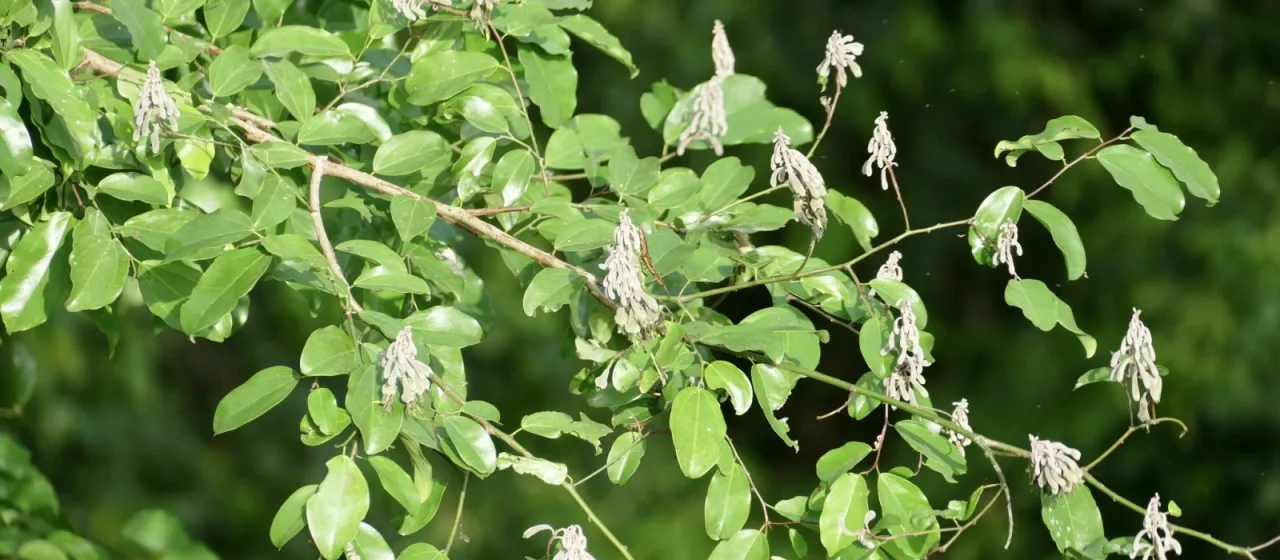
Description
Griffonia simplicifolia is a woody climbing shrub belonging to the Fabaceae (legume) family. This perennial plant acts as a vine in its native tropical habitat, often reaching several meters in height as it climbs forest vegetation to access sunlight in dense environments.
Originating from the tropical regions of West and Central Africa, including countries such as Ghana and Nigeria, the plant thrives in equatorial climates. Agricultural cultivation is typically restricted to tropical zones where high humidity and warm temperatures persist throughout the entire year, ensuring optimal vegetative development and seed maturation.
Botanically, the plant features alternate, oval-shaped leaves and yellow-green flowers organized in terminal racemes. The fruits are pod-like, containing seeds that are of significant biological interest. The plant possesses a robust root system, allowing it to withstand the competitive environment of its native rainforest understory.
Cultivation requirements involve fertile, well-draining soils with high organic matter content. For successful growth, the species requires an average temperature range between 20°C and 30°C and protection from direct, intense midday sun in some stages of growth. Proper vertical support structures are essential in an agricultural setting to manage the climbing habit of the vine.
The primary economic and agricultural value of Griffonia simplicifolia lies in the chemical composition of its seeds. They are a rich, natural source of 5-hydroxytryptophan (5-HTP), a precursor to serotonin. Consequently, the crop is highly valued by the pharmaceutical and supplement industries for producing formulas aimed at mood regulation, sleep enhancement, and stress management.
- Constant high humidity levels.
- Rich, loamy substrate.
- Vertical support systems.
- Protection from frost and cold snaps.